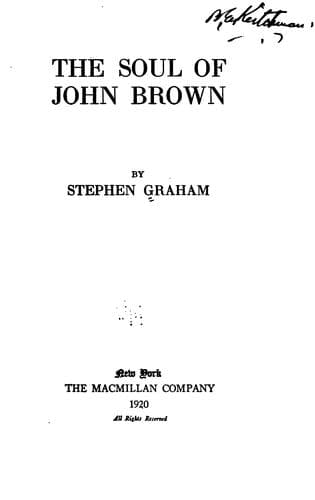
African Americans; United States -- Race relations
One of the worst riots of 1919 took place on the other side of the
river—in the State of Arkansas, at Elaine. It is also in this
so-called Delta region. The origin of the riot was rooted in the
economic problem. The white buyers and landlords had been consistently
defrauding the Negro countryside by overlooking the enhanced value of
cotton. Cotton had risen in price from a pre-war average of ten cents a
pound to twenty-eight cents in 1917 and actually to forty cents in the
current year. Formerly it was generally represented to the Negro that
he was always deep in debt for his “rations” or his rent. The white
policy was to keep the Negro in debt. It was never the custom to render
him accounts or to argue with him when he claimed more than was handed
him.
“You had a fine crop—you’re just about straight,” was a common
greeting in the fall of 1919.
But with the prolific Delta crop of cotton and a quadruple price,
the discontent of the Negro can be imagined. It was intense, and was
growing.
There are two versions of the outcome of it. One is that a firm of
white lawyers approached some of the Negro planters with an idea
of taking the matter to court and seeing what could be obtained in
redress. The other is that the Negroes “got together,” organized a body
called “The Farmers’ Progressive Union,” which then approached the
firm of lawyers on its own account. I incline to think that the former
is the more probable. The white firm thought there was money to be made
from fighting Negro claims. Some of the Negroes were actually agreed
to take the matter to a Federal Grand Jury, and charge the Whites with
frustration of the Fifteenth Amendment to the Constitution.
Public-domain text, read in full here on John Shaqi.
Reviews
Reviews
No reviews yet
Be the first to share your thoughts on this work.
Elsewhere in the archive
Join the Discussion
Join the discussion
Sign in to leave a comment or review.
Sign InorCreate an account