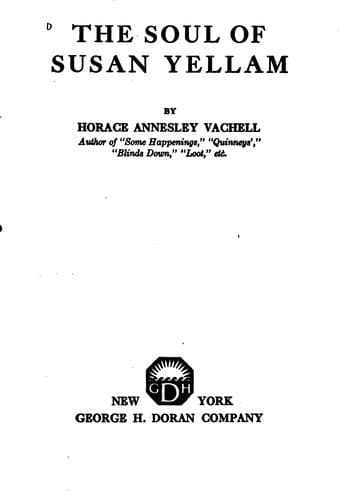
England -- Social life and customs -- 20th century -- Fiction; Villages -- England -- Fiction; World War, 1914-1918 -- Fiction
He confronted these questions ill at ease inwardly. Outwardly, as he had
assured his wife, he carried "a stiff tail." The politeness of the
Belgians oppressed him. If he came into the ward and addressed a man
lying in bed, the poor fellow would struggle to sit up and salute him.
One cheery-faced boy, with eight wounds, passed the time laughing and
crying; then he would fall asleep, smiling in his sleep like a child.
But recruiting had been damped down by Authority, because housing and
equipment were so short. Sir Geoffrey was not encouraged to stump the
county--as he offered to do--and deliver his lecture. His old
school-fellow at the War Office gave him a hint:
"We want the men, but not too many at once."
In the village, women not engrossed with Red Cross work sewed feverishly
upon shirts and pyjamas, and knitted comforters. The Squire examined
some of the pyjamas, and exclaimed:
"Thank God! I don't have to wear them."
Shooting and hunting and football went on much as usual, to the
amazement of our French Allies. Some of our cavalry regiments in France
wanted to import a pack of hounds. The French Mandarins forbade it.
Early in January, a curt telegram from the War Office reached Sir
Geoffrey, as he stood in the hall, after a day in his coverts, shooting
cock-pheasants.
"Lionel Pomfret wounded, degree not stated."
Next morning, Sir Geoffrey hastened to London and to the War Office. No
details were forthcoming. The men he saw were kind and sympathetic.
Captain Pomfret might be badly wounded, but the odds were against that.
The anxious father couldn't find out where his son was, or even where he
was likely to be. He engaged rooms at a hotel and spent a wretched
afternoon at his club. Twenty-four hours dragged themselves by. He was
wondering how much longer he could bear the strain, when the second
telegram reached him.
"Arrived Southampton. Destination unknown. Love. LIONEL."
The Squire, you may be sure, shared these good tidings with many
friends, who congratulated him warmly. Obviously, the wound must be
light. Exasperations followed, thick and fast. Sir Geoffrey hurried to
the War Office, and thence to the Admiralty, and finally to Waterloo,
where, eventually, he had the joy of seeing his son step out of a train,
with a much-bandaged head, but apparently fit and in the highest
spirits. A bit of shrapnel had knocked him down, inflicting a
superficial scalp-wound, which was healing rapidly. Across his overcoat
was a perfectly-defined cut made by a bullet which had missed him and
killed the man at his side. He shewed his father a scar upon his neck,
where another bullet had grazed him. Lionel talked fast and fluently. He
had been in innumerable small actions since Mons, and had seen whole
regiments cut to bits.
Public-domain text, read in full here on John Shaqi.
Reviews
Reviews
No reviews yet
Be the first to share your thoughts on this work.
Elsewhere in the archive
Join the Discussion
Join the discussion
Sign in to leave a comment or review.
Sign InorCreate an account