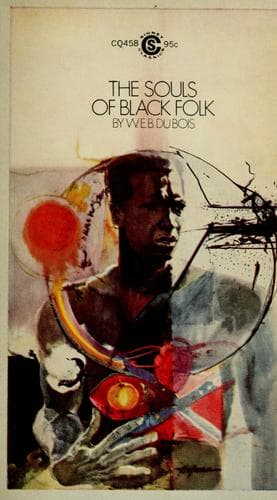
The Souls of Black FolkDu Bois, W. E. B. (William Edward Burghardt)
History
The Souls of Black Folk
Du Bois, W. E. B. (William Edward Burghardt)
African Americans
The security offered for such transactions—a crop and chattel
mortgage—may at first seem slight. And, indeed, the merchants tell many
a true tale of shiftlessness and cheating; of cotton picked at night,
mules disappearing, and tenants absconding. But on the whole the
merchant of the Black Belt is the most prosperous man in the section.
So skilfully and so closely has he drawn the bonds of the law about the
tenant, that the black man has often simply to choose between pauperism
and crime; he “waives” all homestead exemptions in his contract; he
cannot touch his own mortgaged crop, which the laws put almost in the
full control of the land-owner and of the merchant. When the crop is
growing the merchant watches it like a hawk; as soon as it is ready for
market he takes possession of it, sells it, pays the landowner his
rent, subtracts his bill for supplies, and if, as sometimes happens,
there is anything left, he hands it over to the black serf for his
Christmas celebration.
The direct result of this system is an all-cotton scheme of agriculture
and the continued bankruptcy of the tenant. The currency of the Black
Belt is cotton. It is a crop always salable for ready money, not
usually subject to great yearly fluctuations in price, and one which
the Negroes know how to raise. The landlord therefore demands his rent
in cotton, and the merchant will accept mortgages on no other crop.
There is no use asking the black tenant, then, to diversify his
crops,—he cannot under this system. Moreover, the system is bound to
bankrupt the tenant. I remember once meeting a little one-mule wagon on
the River road. A young black fellow sat in it driving listlessly, his
elbows on his knees. His dark-faced wife sat beside him, stolid,
silent.
“Hello!” cried my driver,—he has a most imprudent way of addressing
these people, though they seem used to it,—“what have you got there?”
“Meat and meal,” answered the man, stopping. The meat lay uncovered in
the bottom of the wagon,—a great thin side of fat pork covered with
salt; the meal was in a white bushel bag.
“What did you pay for that meat?”
“Ten cents a pound.” It could have been bought for six or seven cents
cash.
“And the meal?”
“Two dollars.” One dollar and ten cents is the cash price in town. Here
was a man paying five dollars for goods which he could have bought for
three dollars cash, and raised for one dollar or one dollar and a half.
Yet it is not wholly his fault. The Negro farmer started
behind,—started in debt. This was not his choosing, but the crime of
this happy-go-lucky nation which goes blundering along with its
Reconstruction tragedies, its Spanish war interludes and Philippine
matinees, just as though God really were dead. Once in debt, it is no
easy matter for a whole race to emerge.
Public-domain text, read in full here on John Shaqi.
Reviews
Reviews
No reviews yet
Be the first to share your thoughts on this work.
Elsewhere in the archive
Join the Discussion
Join the discussion
Sign in to leave a comment or review.
Sign InorCreate an account