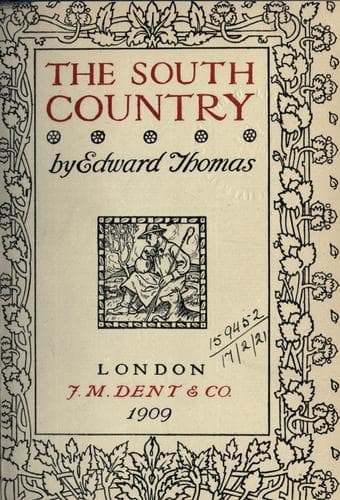
England -- Description and travel; Natural history -- England; Thomas, Edward, 1878-1917 -- Travel -- England
The tall horse-chestnuts throw down their fruit out of the crisp,
rusty foliage and it rolls darkly burnished out of the pods white
as mushrooms in the rain, and where it falls it lies, and no child
gathers it, and the harvest waggons have crushed a thousand under
their wheels. The moss is beginning to encrust the gravel for the
soft feet of the ghosts, of the old men and the mothers and the maids
and the school-boys and tottering babes that have trodden it once.
Now that they are all gone, every one, they seem always to have been
ghosts, with loud, happy voices and wails of sorrow, with smiles, dark
looks, passionate splendours, bright hair, the bright brown hair as
of red deer in the men, the long, heavy coils of living odorous gold
in the women, but flitting to and fro, footless, unconfined, like the
swallows, returning and wandering up and down, as if they had left
something behind in their home.
When I first entered the house by an accident in passing that way,
a great-grandfather, a granddaughter and her son were alone in the
house, with two servants. The mother, early widowed, had come with her
child to minister to the last days of the ancient man. The house was
by then full of the reports of death. In almost every room there had
been a deathbed. For it had always been full of life; there was never
such a house for calling back its children; the sons of it brought
their wives, and the daughters their husbands, and often an excuse
was made for one pair to stay on indefinitely; and thus it came to be
full also of death. This granddaughter, however, had stayed, as she
wished to believe, against her will, because the old man was so fond
of his great-grandchild. She was a beautiful, strong woman, with the
dark, lustrous skin, gold hair, perfect clear features, proud step and
prouder voice, of all the family; she had shone before a thousand eyes;
and yet she stayed on and on, obsessed by the multitudinous memories of
the house alone under the Downs.
Her grandfather would talk of nothing but his father and his
grandfather, the lawyers, the captains, the scholars, whose bones were
under the churchyard elms, and his sons and their sons, all of them
also now dead. He had their childish ways by heart, the childish ways
of men who were white-haired at his birth as well as of those who went
golden-haired but yesterday into the grave; and all their names, their
stately, their out-of-the-way names, and those which recorded the
maiden names of their mothers; their nicknames, too, a whole book of
them; the legends about the most conspicuous, their memorable speeches
and acts, down to the names of their very dolls, and their legends
also, which, of course, recurred again and again in the family fantasy.
Every tree and field and gate and room was connected with some one of
the dear and beauteous or brave dead, with their birth, their deeds,
their ends.
Public-domain text, read in full here on John Shaqi.
Reviews
Reviews
No reviews yet
Be the first to share your thoughts on this work.
Elsewhere in the archive
Join the Discussion
Join the discussion
Sign in to leave a comment or review.
Sign InorCreate an account