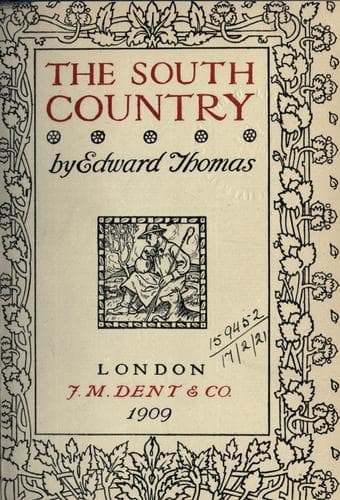
England -- Description and travel; Natural history -- England; Thomas, Edward, 1878-1917 -- Travel -- England
mists, and the woods that lately hung dark and massive and strong upon
the steep hills are transfigured and have become cloudily light and
full of change and ghostly fair; the crowing of a cock in the still
misty morning echoes up in the many-coloured trees like a challenge to
the spirits of them to come out and be seen, but in vain. For months
the woods have been homely and kind, companions and backgrounds to our
actions and thoughts, the wide walls of a mansion utterly our own.
We could have gone on living with them for ever. We had given up the
ardours, the extreme ecstasy of our first bridal affection, but we had
not forgotten them. We could not become indifferent to the Spanish
chestnut-trees that grow at the top of the steep rocky banks on either
side of the road and mingle their foliage overhead. Of all trees
well-grown chestnuts are among the most pleasant to look up at. For the
foliage is not dense and it is for the most part close to the large
boughs, so that the light comes easily down through all the horizontal
leaves, and the shape of each separate one is not lost in the
multitude, while at the same time the bold twists of the branches are
undraped or easily seen through such translucent green. The trunks are
crooked, and the handsome deep furrowing of the bark is often spirally
cut. The limbs are few and wide apart so as to frame huge delicately
lighted and shadowed chambers of silence or of birds’ song. The leaves
turn all together to a leathern hue, and when they fall stiffen and
display their shape on the ground and long refuse to be merged in the
dismal trodden hosts. But when the first one floats past the eye and is
blown like a canoe over the pond we recover once more our knowledge and
fear of Time. All those ladders of goose-grass that scaled the hedges
of spring are dead grey; they are still in their places, but they
clamber no longer. The chief flower is the yellow bloom set in the dark
ivy round the trunks of the ash-trees; and where it climbs over the
holly and makes a solid sunny wall, and in the hedges, a whole people
of wasps and wasp-like flies are always at the bloom with crystal
wings, except when a passing shadow disperses them for a moment with
one buzz. But these cannot long detain the eye from the crumbling woods
in the haze or under the large white clouds--from the amber and orange
bracken about our knees and the blue recesses among the distant golden
beeches when the sky is blue but beginning to be laden with loose
rain-clouds, from the line of leaf-tipped poplars that bend against the
twilight sky; and there is no scent of flowers to hide that of dead
leaves and rotting fruit. We must watch it until the end, and gain
slowly the philosophy or the memory or the forgetfulness that fits us
for accepting winter’s boon. Pauses there are, of course, or what seem
pauses in the declining of this pomp; afternoons when the rooks waver
and caw over their beechen town and the pigeons coo content; dawns
Public-domain text, read in full here on John Shaqi.
Reviews
Reviews
No reviews yet
Be the first to share your thoughts on this work.
Elsewhere in the archive
Join the Discussion
Join the discussion
Sign in to leave a comment or review.
Sign InorCreate an account