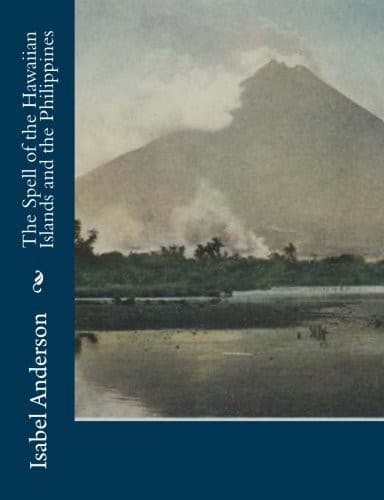
The Spell of the Hawaiian Islands and the PhilippinesAnderson, Isabel
History
The Spell of the Hawaiian Islands and the Philippines
Anderson, Isabel
Hawaii; Philippines
The sanitary conditions which existed in the Islands twenty odd years
ago would seem to us appalling, but perhaps they were no worse than
those of some other tropical countries at that time. Even the most
progressive colonizers, like the English, had given up trying radical
reforms, contenting themselves with making passably healthful
conditions, especially for the European part of the towns. The
combination of climate and native inertia seemed to them one which it
was difficult and almost hopeless to combat. So it remained for us to
prove that the thing could be done--that a tropical country could be
made sanitary and hygienic for all its inhabitants, whether they were
white or brown or yellow, and whether they wanted it made so or not. If
we had done nothing else for our restless dependency, that achievement
would be a sufficient crown of glory.
Manila was then, as it still is, the most highly civilized spot in the
Islands. As I have said, much of the walled city was built of stone
and plaster, but many of the natives in the suburbs lived in one-room
houses made of wood and raised on stilts. No provision whatever was made
for drainage or for the removal of garbage. Each house was a law unto
itself and very often an offense unto its neighbours.
[Illustration: _A Carabao_]
A large part of the city drained, directly or indirectly, into the Pasig
River. Here, also, the carabao, which is not a fastidious animal, went
for his mud baths, and the women washed their clothes. This river
furnished drinking water for all who lived near enough to share the
privilege. It was said to have a flavour like the Ganges, which they
sorely missed later on when a purer supply was substituted.
The medieval wall, which allowed for many damp, unhealthy corners,
interfered with municipal ventilation. No cleansing winds can sweep
through a city whose every street ends in a high wall. Outside was a
stagnant moat which made a convenient breeding place for the industrious
mosquito.
The local market used to be a community dwelling for all the vendors,
who lived there, reveling in their filth. Their children were born
there, also their dogs, pigs, cats, and chickens. It was so vile
smelling that no American dared go into it. Never being cleaned, it was
the center from which disease was spread to the city.
These markets were the first places to be cleaned by the Americans. The
first step was always to burn up the entire shed, and then build an iron
and concrete structure, which could be washed down every night with a
hose. Only the night watchman was allowed to live there.
Public-domain text, read in full here on John Shaqi.
Reviews
Reviews
No reviews yet
Be the first to share your thoughts on this work.
Elsewhere in the archive
Join the Discussion
Join the discussion
Sign in to leave a comment or review.
Sign InorCreate an account