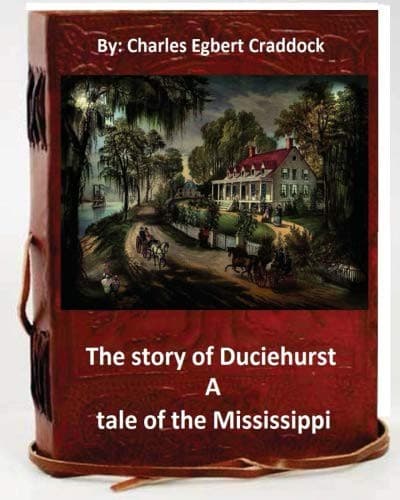
The Story of Duciehurst: A Tale of the MississippiCraddock, Charles Egbert
General
The Story of Duciehurst: A Tale of the Mississippi
Craddock, Charles Egbert
Mississippi River -- Fiction
And, indeed, Hugh Treherne justified the trust. He wrought Colonel
Kenwynton nothing but good. His mental health was so far restored to its
normal strength that when they had returned together to the old home he
took the lead in all those practical little affairs of life which bored
the Colonel, and which he at once misunderstood and despised. He shrank
from society, in which, indeed, he was more feared than welcomed, and
the Colonel, in compassion for his infirmity and loneliness, had given
up most of his cronies. The Colonel suffered from this deprivation more
than Treherne, who took an intense and almost pathetic interest in
trifling improvements; the fences were mended; the farm buildings were
repaired; various small peculations ceased, for the servants and the
hands whose interests brought them about the place were afraid of the
“crazy man,” and were alert and capable in obeying his orders,--the
anger that flashed in his wild dark eyes was not reassuring. He pottered
in placid content about these industrial pursuits till chance led to a
greater utility.
He displayed unexpected judgment in advice which saved the Colonel from
taking a financial step that would, indeed, have bereft the simple snail
of his rickety old shell in his defenseless years, and certain
financiers of a dubious sort, baffled in the expectation of gain at the
old man’s loss, looked askance at Hugh Treherne and his influence with
his former commander which promised in time to remove him altogether
from their clutches. They made great talk of having considered his
interest rather than their own, and in set phrase withdrew the sun of
their favor to shine on his shattered affairs no more. But his affairs
were on the mend. Through Treherne’s urgency he devoted the returns from
the bulk of his cotton crop, unusually large this year, to the lifting
of a mortgage on a pretty tract of land nearer the county town than his
plantation, almost in the suburbs, in truth, and which was thus left
unencumbered. In this matter he was difficult of persuasion, and yielded
only at last to be rid of importunacy.
“Lord, Hugh, how lonesome I do feel without that money,” he said
drearily, lighting his candle one night.
“But you have got the land free of all encumbrance, Colonel,--dead to
rights,--within two miles of the town, right out there in the night.”
“It is a cold night and dark,” said the Colonel, toying with the
snuffers. “It seems cruel to leave it there, bare and bleak, with no
sort of a little old mortgage to cover it.”
But then he laughed and took himself upstairs to his rest.
A similar application of funds betided his later shipments of bales, the
receipts from which were formerly wont to vanish in driblets he hardly
knew how.
Public-domain text, read in full here on John Shaqi.
Reviews
Reviews
No reviews yet
Be the first to share your thoughts on this work.
Elsewhere in the archive
Join the Discussion
Join the discussion
Sign in to leave a comment or review.
Sign InorCreate an account