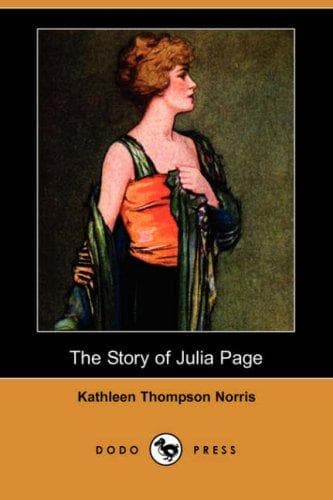
Marriage -- Fiction; Runaway husbands -- Fiction; Social settlements -- Fiction; Women -- Fiction
She watched Miss Wheaton come and go in the soft twilight. A shaded
light bloomed suddenly, where it would not distress her eyes. The
curtains were drawn, and Ellie came softly in with a pitcher of hot milk
on a tray. Now and then the baby's piercing little "Oo-wah-wah!" came in
from the next room, and when she heard it, Julia smiled and said
faintly, "The darling!"
And as a ship that has been blown seaward, to meet the gales and to be
battered upon rocks, might be caught at last by friendlier tides and
carried safely home, so Julia felt herself carried, a helpless little
wreck, too tired to care if the waves flung her far up on shore or drew
her out to their mad embraces again.
"All forgotten?" Miss Toland had asked, from her fifty years of
ignorance, and "Now you must forget all the pain," Mrs. Toland had said,
with her motherly smile.
Queer, drifting thoughts came and went in her active brain during these
quiet days of convalescence. She thought of girls she had known at The
Alexander, girls who had cried, and who had been blamed and ostracised,
girls who had gone to the City and County Hospital for their bitter
hour, and had afterward put the babies in the Asylum! Julia's thoughts
went by the baby in the next room, and at the picture of that tender
helplessness, wronged and abandoned, her heart seemed to close like a
closing hand.
Anna Toland Studdiford would never be abandoned, no fear of that. Never
was baby more closely surrounded with love and the means of protection.
But the other babies, just as dear to other women, what of them? What of
mother hearts that must go through life knowing that there are little
cries they will never hear, tears they may never dry, tired little
bodies that will never know the restfulness of gentle arms? The terrible
sum of unnecessary human suffering rose up like a black cloud all about
her; she seemed to see long hospital wards, with silent forms filling
them day and night, night and day, the long years through; she had
glimpses of the crowded homes of the poor, the sick and helpless
mothers, the crying babies. She suddenly knew sickness and helplessness
to be two of the greatest factors in human life.
"What if Heaven is only this earth, clean and right at last," mused
Julia, "and Hell only the realization of what we might have done, and
didn't do--for each other!" And to Jim she said, smiling, "This
experience has not only given me a baby, and given me my own motherhood,
but it seems to have given me all the mothers and the babies in the
world as well! I wish you were a baby doctor, Jim--the preservation of
babies is the most important thing in the world!"
Slowly the kindly tides brought her back to life, and against her own
belief that it would ever be so, she found herself walking again,
essaying the stairs, taking her place at the table. Miss Wheaton went
away, the capable Caroline took her place, and Julia was well.
Public-domain text, read in full here on John Shaqi.
Reviews
Reviews
No reviews yet
Be the first to share your thoughts on this work.
Elsewhere in the archive
Join the Discussion
Join the discussion
Sign in to leave a comment or review.
Sign InorCreate an account