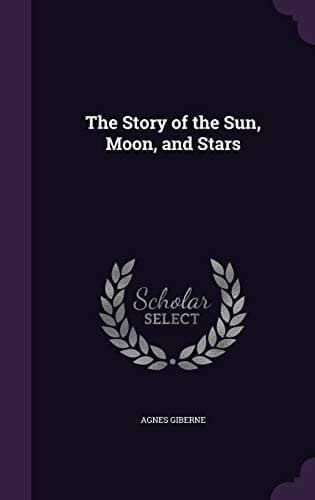
The story of the sun, moon, and starsGiberne, Agnes
Science
The story of the sun, moon, and stars
Giberne, Agnes
Astronomy -- Juvenile literature
A main difference between the two kinds of telescope thus resides in
the fact that the star-rays--or any other kind of light-rays--when
first captured, pass, in one case, _through_ the glass on which they
fall, and, in the other case, are thrown off _from_ the mirror. In both
cases, the whole amount of light so captured is gathered into a small
compass, so as to be available for human sight.
[Illustration: EYE-PIECE OF THE LICK TELESCOPE.]
Once more, let me remind you, it should be always kept clearly in
mind that every object that is seen by us--from a mote of dust to a
sun, from a coal-scuttle to a star--is perceived purely and solely by
the light which it gives out, either intrinsic or reflected light.
Countless myriads of rays pass from the surface of the thing seen to
our eyes, picturing there, on the sensitive retina, a fleeting vision
of its form.
All the leading Governments in Europe have observatories for the study
of the heavens, which are furnished with the best instruments of modern
construction. The principal observatories are those at Paris, Berlin,
Vienna, Nice; Dorpat, the seat of a celebrated university founded by
Gustavus Adolphus, of Sweden, in 1630; Pulkowa, near St. Petersburg;
Lisbon, and at Greenwich in England. In America, though only in recent
years has astronomy been cultivated with ardor, there are observatories
of more or less importance,--the National Observatory at Washington,
D. C.; the Cincinnati Observatory, projected by the late General O. M.
Mitchel; the Dudley Observatory, founded by Mrs. Blandina Dudley in
honor of her husband, at Albany, N. Y.; the Lick Observatory, founded
by James Lick, on Mount Hamilton, Cal.; and the Yerkes Observatory,
connected with the Chicago University, founded by Charles T. Yerkes.
Besides these, there are observatories connected with some of our other
leading universities and colleges, as those of Harvard, at Cambridge,
Mass.; Yale University; Williams College; West Point Military Academy;
Amherst College; Princeton; Dartmouth; Michigan University; Hamilton
College, N. Y., and several others.
[Illustration: LICK OBSERVATORY IN WINTER, FROM THE EAST.]
The largest and best refracting telescopes in the world are those
at Lick Observatory and at Yerkes Observatory, now in charge
of Professor E. E. Barnard, who, while at the head of the Lick
Observatory, discovered the fifth satellite of Jupiter, and determined
the character of the inner ring of Saturn. The best reflecting
telescope is that of Lord Rosse, at Birr Castle, in Kings County,
Ireland.
[Illustration: E. E. BARNARD.]
Public-domain text, read in full here on John Shaqi.
Reviews
Reviews
No reviews yet
Be the first to share your thoughts on this work.
Elsewhere in the archive
Join the Discussion
Join the discussion
Sign in to leave a comment or review.
Sign InorCreate an account