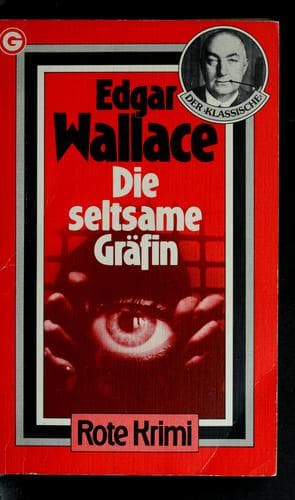
Countesses -- Fiction; Crime -- Fiction; Detective and mystery stories; Household employees -- Fiction; Young women -- Fiction
“Get him away quick!” screamed the countess, as a patter of feet came
along the corridor. “I can say it was an accident.”
“Don’t touch him!”
A girl, almost as great a scarecrow as the panting Selwyn, was leaning
over the balcony.
“You can tell them what you like, but you can’t tell them anything
they’ll believe after they’ve heard me!”
The door was pushed open at that moment, and a man half-dressed came
running in, and stopped dead, gaping at the scene that met his eyes.
Almost immediately the doorway was filled with dishevelled men and
women.
“Is there any trouble, my lady?”
“None,” she said sharply, and pointed to the door. “Wait outside.”
She looked up at the girl in the gallery.
“I think you would be well advised to ask my son to change his plans,”
she said, in the same calm, even voice which Selwyn knew so well. “The
matter can be adjusted to-morrow. Selwyn, go back to your friend and
take this lady with you.”
Mrs. Pinder was sitting on a chair, her frail frame shaking
convulsively, while Selwyn strove to comfort her. At Lady Moron’s
words she stood up, and, with the man’s arm about her, passed into the
crowded corridor, and in a few seconds Lizzy Smith had joined them.
Chapter Thirty-six
Leonora, Countess of Moron, paced her long dressing-room, her hands
behind her, a calm, speculative woman, for emotion did not belong to
her. Chesney Praye and the doctor she had left in the music-room, and
through the windows that overlooked the stone porch at the front of
the house she had, a few minutes before, seen the car pass which
carried Mary Pinder to happiness and freedom.
Lady Moron felt no resentment against any save the weakling son she
had hated from his birth. There was still a hope that the wheel would
turn by some miracle in her favour. All she had played for, all she
had won, was gone. It was the hour of reparation and judgment, not yet
for her the hour of penitence.
Opening a little safe that was set in the wall, concealed by a silver
barometer, she took out a tiny box and shook on to the table a folded
sheet of newspaper and a key. This she put into her bag. From the back
of the safe she pulled to view a small automatic pistol, and, jerking
back the cover to assure herself that it was loaded, fixed the safety
catch. This too went into the bag. Then she rang the bell, and her
scared maid answered after a long interval.
“Tell Henry that I wish the Rolls to be at the door in ten minutes,”
she said, and at the end of that time, with her cloak wrapped about
her shoulders, she stepped into the car, pausing only to give
directions. “Charlotte Street,” she said, and gave the number.
She turned over in her mind the events of the past few weeks, striving
to discover the key flaw of her plan. Some force had been working
against her. Dorn was the instrument, but behind that was a power the
identity of which she could not imagine.
Public-domain text, read in full here on John Shaqi.
Reviews
Reviews
No reviews yet
Be the first to share your thoughts on this work.
Elsewhere in the archive
Join the Discussion
Join the discussion
Sign in to leave a comment or review.
Sign InorCreate an account