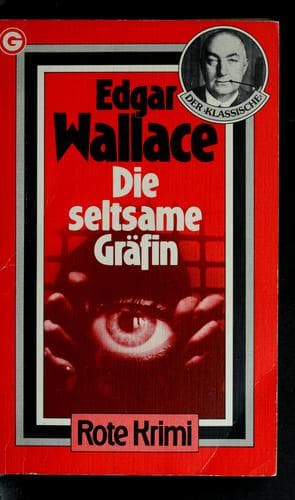
Countesses -- Fiction; Crime -- Fiction; Detective and mystery stories; Household employees -- Fiction; Young women -- Fiction
“I don’t know what you mean by your outlandish gibberish,” said the
woman’s voice huskily. “You get away, mister, before you’re in
trouble.”
Michael, thrusting his lamp in the direction of the gate-top, looked
up at a row of rusty iron spikes. Should he take the risk? These
people might be law-abiding, and it was not remarkable that the woman
should have a few Indian phrases. She might have been a soldier’s wife
who had lived in India and had acquired the habit of that pigeon talk.
“Won’t you be sensible and let me in? I only want to ask you a few
questions.” And then, as an inspiration came to him: “I am from Mr.
Chesney Praye.”
This time the silence was so long that he thought they had gone. Then
the woman spoke.
“We don’t know Mr. Chesney Praye, and we’re going in.”
“We? Who’s your friend?” asked Michael, but there was no answer.
Presently the door was slammed ostentatiously. Behind the gates he
could hear the growling and snuffling of the dogs, and when he put his
toe cautiously under the space between earth and gate he heard the
vicious snap of a jaw, and smiled in the darkness. Soon after, the man
and woman at the upstairs window heard the whine of a motor and saw
the two white beams of its head-lamps moving towards London.
And Lois Reddle lay sobbing on her bed, and in her heart the despair
of hopelessness.
Chapter Twenty-seven
Two hours after Michael Dorn had gone, Dr. Tappatt sat in his
parlour, his elbows on his knees, his big face cupped in his hands.
Beside him was a half-filled tumbler of whisky, and he was gazing into
the fire, which was lit for him summer and winter since he had left
India. There had been a time when his name had ranked high in the
profession of medicine, but an unsavoury incident had driven him from
Edinburgh, where, although he was young, he had established an
excellent practice, and he found himself in India, with no other
assets than his undoubted skill, the meagre remnants of his savings,
and a taste for good wine. For a time he had been attached to the
court of an Indian prince, and then, in an evil moment, he had
conceived the idea of a mental home for wealthy Indians.
But for the growing craving for drink he might have retired after a
few years, with sufficient to keep him for the rest of his life. But
there was a kink somewhere in Dr. Tappatt’s nature and it showed
itself only too clearly in his conduct of the home. He had to leave
the North-West Provinces in a hurry and settle in Bengal, where there
were queer stories about the home he founded there. There were
applications at court by the relatives of patients who had been put
away by interested people, and in the end his home was closed and he
moved into the Punjab.
His brilliant brain had been sharpened by conflict with authority, and
he had become something of a strategist, for strategy is the art of
knowing your enemy’s mind.
Public-domain text, read in full here on John Shaqi.
Reviews
Reviews
No reviews yet
Be the first to share your thoughts on this work.
Elsewhere in the archive
Join the Discussion
Join the discussion
Sign in to leave a comment or review.
Sign InorCreate an account