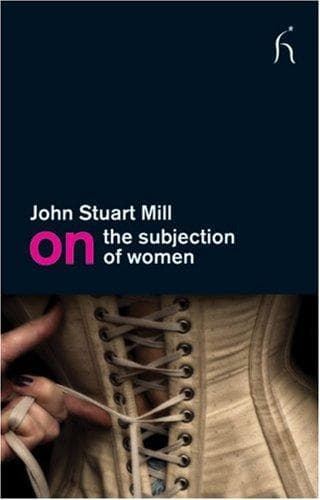
Women -- Social and moral questions; Women's rights
In the first place, we may fairly question whether experience has
afforded sufficient grounds for an induction. It is scarcely three
generations since women, saving very rare exceptions, have begun to
try their capacity in philosophy, science, or art. It is only in the
present generation that their attempts have been at all numerous; and
they are even now extremely few, everywhere but in England and
France. It is a relevant question, whether a mind possessing the
requisites of first-rate eminence in speculation or creative art
could have been expected, on the mere calculation of chances, to turn
up during that lapse of time, among the women whose tastes and
personal position admitted of their devoting themselves to these
pursuits. In all things which there has yet been time for--in all but
the very highest grades in the scale of excellence, especially in the
department in which they have been longest engaged, literature (both
prose and poetry)--women have done quite as much, have obtained fully
as high prizes and as many of them, as could be expected from the
length of time and the number of competitors. If we go back to the
earlier period when very few women made the attempt, yet some of
those few made it with distinguished success. The Greeks always
accounted Sappho among their great poets; and we may well suppose
that Myrtis, said to have been the teacher of Pindar, and Corinna,
who five times bore away from him the prize of poetry, must at least
have had sufficient merit to admit of being compared with that great
name. Aspasia did not leave any philosophical writings; but it is an
admitted fact that Socrates resorted to her for instruction, and
avowed himself to have obtained it.
Public-domain text, read in full here on John Shaqi.
Reviews
Reviews
No reviews yet
Be the first to share your thoughts on this work.
Elsewhere in the archive
Join the Discussion
Join the discussion
Sign in to leave a comment or review.
Sign InorCreate an account