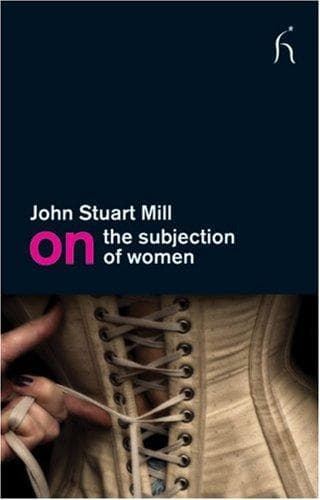
Women -- Social and moral questions; Women's rights
women; who were distinguished from the other defenceless classes by
the high rewards which they had it in their power voluntarily to
bestow on those who endeavoured to earn their favour, instead of
extorting their subjection. Though the practice of chivalry fell even
more sadly short of its theoretic standard than practice generally
falls below theory, it remains one of the most precious monuments of
the moral history of our race; as a remarkable instance of a
concerted and organized attempt by a most disorganized and distracted
society, to raise up and carry into practice a moral ideal greatly in
advance of its social condition and institutions; so much so as to
have been completely frustrated in the main object, yet never
entirely inefficacious, and which has left a most sensible, and for
the most part a highly valuable impress on the ideas and feelings of
all subsequent times.
The chivalrous ideal is the acme of the influence of women's
sentiments on the moral cultivation of mankind: and if women are to
remain in their subordinate situation, it were greatly to be lamented
that the chivalrous standard should have passed away, for it is the
only one at all capable of mitigating the demoralizing influences of
that position. But the changes in the general state of the species
rendered inevitable the substitution of a totally different ideal of
morality for the chivalrous one. Chivalry was the attempt to infuse
moral elements into a state of society in which everything depended
for good or evil on individual prowess, under the softening
influences of individual delicacy and generosity. In modern
societies, all things, even in the military department of affairs,
are decided, not by individual effort, but by the combined operations
of numbers; while the main occupation of society has changed from
fighting to business, from military to industrial life. The
exigencies of the new life are no more exclusive of the virtues of
generosity than those of the old, but it no longer entirely depends
on them. The main foundations of the moral life of modern times must
be justice and prudence; the respect of each for the rights of every
other, and the ability of each to take care of himself. Chivalry left
without legal check all forms of wrong which reigned unpunished
throughout society; it only encouraged a few to do right in
preference to wrong, by the direction it gave to the instruments of
praise and admiration. But the real dependence of morality must
always be upon its penal sanctions--its power to deter from evil. The
security of society cannot rest on merely rendering honour to right,
a motive so comparatively weak in all but a few, and which on very
many does not operate at all. Modern society is able to repress wrong
through all departments of life, by a fit exertion of the superior
strength which civilization has given it, and thus to render the
existence of the weaker members of society (no longer defenceless but
Public-domain text, read in full here on John Shaqi.
Reviews
Reviews
No reviews yet
Be the first to share your thoughts on this work.
Elsewhere in the archive
Join the Discussion
Join the discussion
Sign in to leave a comment or review.
Sign InorCreate an account