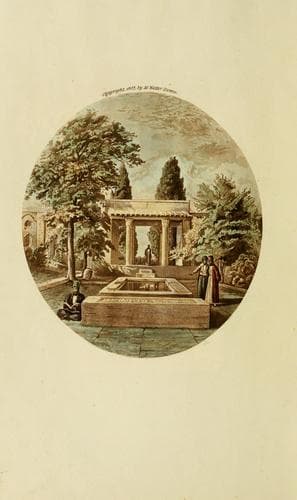
The Sufistic Quatrains of Omar KhayyamOmar Khayyam
ReligionSufism
The Sufistic Quatrains of Omar Khayyam
Omar Khayyam
FitzGerald, Edward, 1809-1883; Sufi poetry
MONSIEUR J.B. NICOLAS
THE QUATRAINS OF KHAYYAM
This grand old poet, who flourished in the 11th century and who brought
into Khorasan the delights of the Court of the Seldjoukides, still, in
our day, continues to charm with the pleasures of the palace of the
Kadjars at Teheran. But the difficulty, on the one hand, of translating
a writer so essentially abstract in his philosophic thought, so
Mystically foreign in his figurative expressions (too often presented in
the form of a repulsive materialism), and on the other, the
embarrassment I could foresee in the correcting of proofs at so great a
distance from Paris, and above all the feeling of my incapacity for
undertaking so great a work, always prevented my publishing anything up
to the present time.
On my last journey to Paris, I met some friends eager for something new
in the way of Oriental literature, among whom I am pleased to mention
Madam Blanchecotte, moralist and poet, known through her many witty and
impassioned publications. After having listened to the brief quotations
which I was able to cite to them from the quatrains of the poet with
whom we are now occupied, they so strongly urged me to publish a
complete translation, and put so much emphasis on their demand and so
much kindness in their offers of service, that I decided to conform to
their desires in editing this work to-day.
I should, however, still have considered it beyond my powers, without
the co-operation of Hassan-Ali-Khan, minister plenipotentiary from
Persia at the Court of the Tuileries, who put himself out to aid me with
his profound erudition and valuable advice.
The history of Khayyam, bound to that of two persons who played a great
rôle in the annals of the country, is, I believe, of sufficient
interest to warrant my telling it here as it has been transmitted to us
by the Persian historians.
Khayyam, born in a village situated near Nishapur, in Khorasan, went to
complete his studies at the celebrated _medresseh_ of that city, towards
the end of the year 1042 of the Christian era. Accounts tell us that
this college had acquired at that time the reputation of producing
pupils of rare distinction, from among whom men of talent and remarkable
skill often sprung up and rapidly attained to the highest positions in
the empire.
Public-domain text, read in full here on John Shaqi.
Reviews
Reviews
No reviews yet
Be the first to share your thoughts on this work.
Elsewhere in the archive
Join the Discussion
Join the discussion
Sign in to leave a comment or review.
Sign InorCreate an account