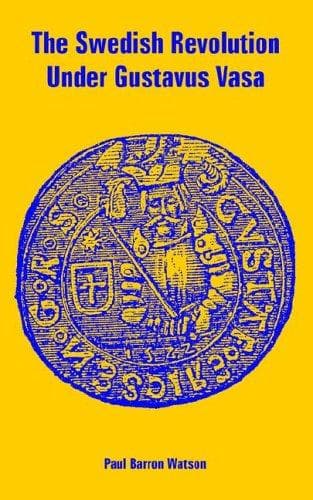
The Swedish Revolution Under Gustavus VasaWatson, Paul Barron
History
The Swedish Revolution Under Gustavus Vasa
Watson, Paul Barron
Gustav I Vasa, King of Sweden, 1496-1560; Sweden -- History -- Gustav I Vasa, 1523-1560
Gustavus was determined, however, that the matter should not drop.
Convinced that any discord inside the Church would be a benefit to the
crown, he resolved to hold a theological disputation, and selected a
champion from the two chief factions, with orders to appear at Christmas
in Upsala and defend the doctrines of his party in open court. The
Lutheran gladiator of course was Petri, his opponent being one Peder
Galle, a learned canon of Upsala. The main points that were discussed
are these: man's justification; free will; forgiveness of sins;
invocation and worship of saints; purgatory; celebration of vigils and
masses for the dead; chanting of the service; good works, and rewards;
papal and monastic indulgences; sacraments; predestination;
excommunication; pilgrimages. The battle on these questions was fought,
December 27, in the Chapter-house at Upsala; and the chronicle tells
us, somewhat unnecessarily, that the fight was hot. Each party was
struggling for the very kernel of his faith. If the Bible were
acknowledged to be our sole authority in religious things, the whole
fabric of the papal Church was wrong. On the other hand, if power were
granted to the Fathers to establish doctrines and methods supplementary
to the Bible, the Lutherans had no right to disobey. As Gustavus was
arbiter of the battle, there could be no doubt of the result. Petri is
asserted to have come off victor, on the ground that his citations were
all from Holy Writ.[107]
Flattered by this great victory, the Lutherans grew bold. Though not so
turbulent as before the riot, they showed much indiscretion, and
Gustavus often found it necessary to interfere. What annoyed him chiefly
was their bravado in alluding to the popes and bishops. The hierarchy of
Romanism was fixed so firmly in people's hearts that every effort to
dislodge it caused a jar. Especially in the rural districts was it
necessary not to give alarm. A single deed or word might work an injury
which many months of argument could not efface. It is not strange,
therefore, that the king was troubled when Petri, in February, 1525,
violated every rule of Church propriety by being married publicly in
Stockholm. The marriage fell like a thunderclap upon the Church. Brask
apparently could not believe his ears. He dashed off a letter to another
prelate to inquire whether the report was true, and finding that it was,
wrote to the archbishop as well as to the king, denouncing the whole
affair. "Though the ceremony has been performed," he argued, "the
marriage is invalid, for such was the decree made by the sixth Council
of the Church." In his letter to the king, Brask used these words: "Your
Majesty must be aware that much talk has been occasioned by the marriage
in your capital of Olaus Petri, a Christian priest. At a future day,
should the marriage result in children, there will be much trouble, for
the law declares that children of a priest shall stand, in matters of
inheritance, on a par with bastards....
Public-domain text, read in full here on John Shaqi.
Reviews
Reviews
No reviews yet
Be the first to share your thoughts on this work.
Elsewhere in the archive
Join the Discussion
Join the discussion
Sign in to leave a comment or review.
Sign InorCreate an account