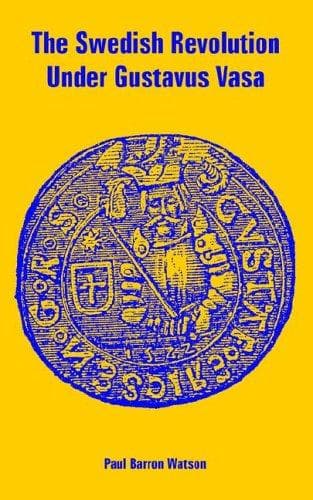
The Swedish Revolution Under Gustavus VasaWatson, Paul Barron
History
The Swedish Revolution Under Gustavus Vasa
Watson, Paul Barron
Gustav I Vasa, King of Sweden, 1496-1560; Sweden -- History -- Gustav I Vasa, 1523-1560
Meantime matters had progressed to some extent with Norway. On the 22d
of July, the passport issued for the refugees having nearly expired
without intimation that it would be used, Gustavus wrote to Fredrik:
"Sunnanväder and the other fugitives are still maintained with honor in
Norway, and are continually plotting new revolt. They receive especial
favor from the archbishop of Trondhem, who is said to have appointed one
of them his deacon. We have written frequently about them to the Cabinet
of Norway, but the more we write the more honor they receive." This
charge was proved by subsequent events to be a trifle hasty. Scarce had
the letter been despatched when Knut, who was probably the least guilty
of the two conspirators, arrived. He came by order of the archbishop of
Trondhem, and along with him came a letter from the archbishop,
declaring that, as the king had promised the fugitives they should be
tried by prelates of the Church, one of them was surrendered.
Sunnanväder would likewise have been handed over but that he was ill.
The archbishop closed by urging Gustavus to show mercy. It is to be
noted that the king had never promised that the tribunal should consist
of prelates. What he had said was that they should be tried before a
"proper tribunal." Doubtless it was customary that priests should not be
tried by laymen, but the practice was not invariably followed, and the
language of the passport was enough to throw the conspirators on their
guard. In a case of conspiracy against the crown, the Swedish Cabinet
would seem to be a proper tribunal, and as a matter of fact it was
before the Cabinet that this case was tried. The Cabinet consisted of
the archbishop of Upsala, three bishops, and eight laymen. Their decree
was, in the first place, that the passport did not protect Knut from
trial, and secondly, that he was guilty of conspiracy against the crown.
The decree was dated August 9. On that very day the king of Denmark
wrote Gustavus that he had ordered the archbishop of Trondhem to give no
shelter to the traitors, and added: "We are told that you are ready to
promise them a trial before yourself and the Swedish Cabinet, after
which they shall be permitted to go free." Gustavus had never promised
that they should go free, and it was preposterous for anybody to expect
it. The only object of the trial was to give the traitors an opportunity
to prove their innocence, and if they failed to do so, it was only fair
that they should suffer. As soon as the decree was signed, Gustavus
wrote the archbishop of Trondhem that Knut had been found guilty, but
that his life should be spared to satisfy the archbishop, at any rate
until Gustavus could learn what the archbishop proposed to do with the
other refugees. A similar letter was sent also by the Cabinet, declaring
that "many serious charges were made against Knut, which he was in no
way able to disprove." One of the Cabinet members, who had been asked by
Public-domain text, read in full here on John Shaqi.
Reviews
Reviews
No reviews yet
Be the first to share your thoughts on this work.
Elsewhere in the archive
Join the Discussion
Join the discussion
Sign in to leave a comment or review.
Sign InorCreate an account