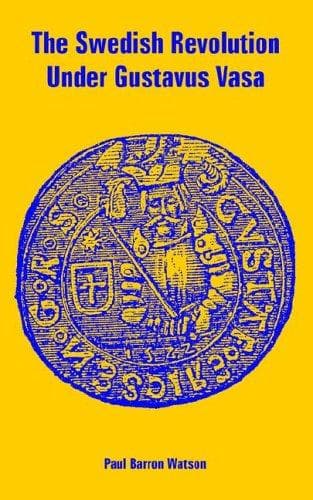
The Swedish Revolution Under Gustavus VasaWatson, Paul Barron
History
The Swedish Revolution Under Gustavus Vasa
Watson, Paul Barron
Gustav I Vasa, King of Sweden, 1496-1560; Sweden -- History -- Gustav I Vasa, 1523-1560
massed themselves outside the northern gate, which at a concerted signal
was thrown open on its hinges, and the infantry pressed in. It was but
the work of a moment to put the little garrison to the sword. For a few
weeks more the castle refused to yield, and it was not till the 7th of
July that, reduced to the last extremity, it fell.[71]
Kalmar had not yet fallen when it became clear that the war of
independence was drawing to its close, and it was felt on every hand
that the country had been too long without a king. The powers which
Gustavus possessed as regent were too vague to meet the necessities of a
time of peace. While the army was in the field, he had authority, as
commander of the forces, to levy the taxes necessary to sustain his men;
but, so soon as the war was over, there would be no means for raising
the money needed to pay the nation's debts. He therefore, shortly before
the fall of Kalmar, summoned a general diet to be held at Strengnäs on
the 27th of May. Whether or not all the magnates of Sweden were summoned
to the diet is not known, but at any rate the peasantry were
represented. The wily Brask, who had once saved his head by a bit of
strategy, dared not put it in jeopardy again, and fearing that matters
of weight might be brought before the diet, was suddenly taken ill and
rendered unable to attend. The Cabinet, hitherto the sum and substance
of a general diet, was practically dead, having been carried off in the
fearful slaughter of 1520. One of the first things to be done,
therefore, after the opening of the diet, was to fill these vacant
seats. This was accomplished on the 2d of June, but whether the members
were chosen by Gustavus or by vote of the general diet we are not told.
Noteworthy it is, that the persons selected, nine in number, were all
of them laymen and warriors in the service of Gustavus. Four days later,
on the 6th of June, the question of electing a king of Sweden was
brought before the house. The proposal was received with shouts of
acclamation, and with one accord the delegates raised their voices in
favor of Gustavus. But the regent, so the reporter tells us, rose to his
feet, and, mid the deafening shouts of those about him, declared that he
had no wish for further honor, that he was weary of leadership, that he
had found more gall than honey in the post, and that there were others
more worthy than himself on whom to lay the crown. So importunate,
however, were the delegates, that at last he yielded, accepted their
allegiance, and took the royal oath. This done, the diet voted to levy a
tax to defray the expenses of the war. Among the very first Acts to
which the newly chosen monarch attached his seal was one which granted
the cities of Lubeck and Dantzic, with their allies, the perpetual
monopoly of all foreign trade with Sweden. At the same time it was
provided that Stockholm, Kalmar, Söderköping, and Åbo should be the only
ports of entry for foreign merchants in the realm. This Act was the
Public-domain text, read in full here on John Shaqi.
Reviews
Reviews
No reviews yet
Be the first to share your thoughts on this work.
Elsewhere in the archive
Join the Discussion
Join the discussion
Sign in to leave a comment or review.
Sign InorCreate an account