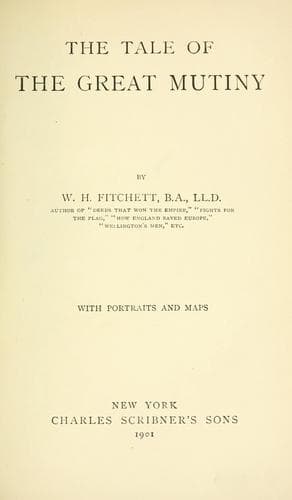
The Tale of the Great MutinyFitchett, W. H. (William Henry)
History
The Tale of the Great Mutiny
Fitchett, W. H. (William Henry)
India -- History -- Sepoy Rebellion, 1857-1858
Campbell’s imagination, it seems, was haunted by the sense that each
Sepoy position, when it was carried, was an abandoned powder-magazine,
packed thick with the possibilities of dreadful explosions. And facts
justified that uncomfortable belief. The story of one such fatal
explosion may be briefly told. In the Jumma Musjid no less than nine
cart-loads of gunpowder were discovered. The powder was packed in tin
cases, and it was resolved to destroy it by flinging the cases down a
well. A line of men was formed, and the cases passed quickly from hand to
hand. The first case flung down struck against the side of the well, and
exploded. The flame ran from case to case along the whole line till it
reached the carts. The cases in the very hands of the men exploded, the
nine cart-loads went off in one terrific blast of flame and sound, and,
with one exception, the whole party—numbering twenty-two men, with two
engineer officers in command—was killed. The only man who escaped was the
one that threw that fatal first case down the well!
When the Kaisarbagh and the Mess-house fell, and the third line of
Sepoy defences was thus carried, Lucknow was practically in the British
power. But on the next day, March 15, Colin Campbell, wary and war-wise
soldier though he was, committed a second blunder, which helped to rob
the success of some of its best fruits. He realised the blunder he
committed when he held back Outram, and to remedy it he perpetrated a
further mistake. He despatched his two cavalry brigades in pursuit of
the flying Sepoys, and despatched them on the wrong roads. The absence
of the cavalry created a huge gap in the British lines on the north of
the Goomtee, and a great body of Sepoys, said to be more than 20,000
strong, escaped through it unharmed. “In this way,” says Lord Roberts,
“the campaign, which should then have come to an end, was protracted
for nearly a year by the fugitives spreading themselves over Oude, and
occupying forts and other strong positions, from which they were able to
offer resistance to our troops till the end of May 1859; thus causing
needless loss of thousands of British soldiers.” That is a severe
condemnation to be written by one great soldier on another.
Public-domain text, read in full here on John Shaqi.
Reviews
Reviews
No reviews yet
Be the first to share your thoughts on this work.
Elsewhere in the archive
Join the Discussion
Join the discussion
Sign in to leave a comment or review.
Sign InorCreate an account