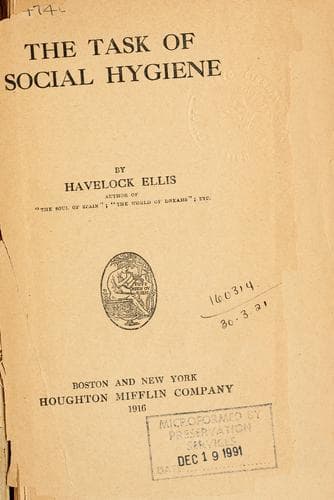
Eugenics; Sexual ethics; Women -- Social and moral questions
[232] The general strike, which has been especially developed by the
syndicalist Labour movement, and is now tending to spread to various
countries, is a highly powerful weapon, so powerful that its results are
not less serious than those of war. To use it against war seems to be to
cast out Beelzebub by Beelzebub. Even in Labour disputes the modern
strike threatens to become as serious and, indeed, almost as sanguinary
as the civil wars of ancient times. The tendency is, therefore, in
progressive countries, as we see in Australia, to supersede strikes by
conciliation and arbitration, just as war is tending to be superseded by
international tribunals. These two aims are, however, absolutely
distinct, and the introduction of law into the disputes between nations
can have no direct effect on the disputes between social classes. It is
quite possible, however, that it may have an indirect effect, and that
when disputes between nations are settled in an orderly manner, social
feeling will forbid disputes between classes to be settled in a
disorderly manner.
[233] The Abbe de Saint-Pierre (1658-1743), a churchman without vocation,
was a Norman of noble family, and first published his Memoires pour
rendre la Paix Perpetuelle a l'Europe in 1722. As Siegler-Pascal well
shows (Les Projets de l'Abbe de Saint-Pierre, 1900) he was not a mere
visionary Utopian, but an acute and far-seeing thinker, practical in his
methods, a close observer, an experimentalist, and one of the first to
attempt the employment of statistics. He was secretary to the French
plenipotentiaries who negotiated the Treaty of Utrecht, and was thus
probably put on the track of his scheme. He proposed that the various
European states should name plenipotentiaries to form a permanent
tribunal of compulsory arbitration for the settlement of all
differences. If any state took up arms against one of the allies, the
whole confederation would conjointly enter the field, at their conjoint
expense, against the offending state. He was opposed to absolute
disarmament, an army being necessary to ensure peace, but it must be a
joint army composed of contingents from each Power in the confederation.
Saint-Pierre, it will be seen, had clearly grasped the essential facts
of the situation as we see them to-day. "The author of The Project of
Perpetual Peace" concludes Prof. Pierre Robert in a sympathetic summary
of his career (Petit de Julleville, Histoire de la Langue et de la
Litterature Francaise, Vol. VI), "is the precursor of the twentieth
century." His statue, we cannot doubt, will be a conspicuous object,
beside Sully's, on the future Palace of any international tribunal.
Public-domain text, read in full here on John Shaqi.
Reviews
Reviews
No reviews yet
Be the first to share your thoughts on this work.
Elsewhere in the archive
Join the Discussion
Join the discussion
Sign in to leave a comment or review.
Sign InorCreate an account