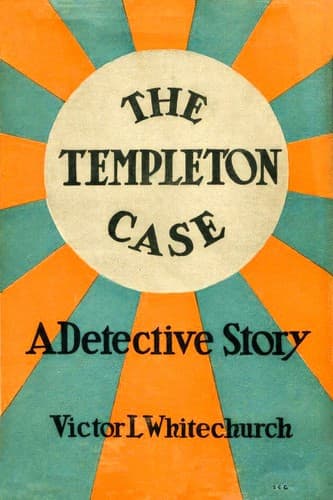
The Templeton caseWhitechurch, Victor L. (Victor Lorenzo)
General
The Templeton case
Whitechurch, Victor L. (Victor Lorenzo)
Detective and mystery stories; Murder -- Investigation -- Fiction; Police -- England -- Fiction
As the weeks went by, Frattenbury and the newspapers forgot all about
the murder. There were other matters for local gossip. People hinted
that Francis Norwood was getting closer than ever with his cash. He
demanded payments almost before he gave advice or transacted business.
He sold a block of cottages belonging to him. And sundry creditors
began to say they wished he was as ready to pay his bills as he was to
be paid.
The Dean returned from his trip to the Riviera, and Colson called on
him again. This time he came out of the Deanery evoking blessings on
the heads of the clergy, instead of curses. There was another long
conference between the three policemen—and their faces were graver
than ever. Colson watched the shipping news anxiously, and one day
took himself off to Plymouth, returning with a sallow-faced man who
joined the trio at a further conference that evening—and it was very
late when Colson took the stranger to his own house—where Mrs. Colson
had a spare room ready for him.
“To-morrow, then,” the Chief Constable had said, when Colson left, and
Colson had repeated the words.
In the morning, the detective, who was carrying the stick he had found
in the dinghy, met Canon Fittleworth. He stopped him.
“In confidence, sir,” he said, “I shall have some news to tell you
this evening—about your late cousin. Shall you be at home?”
“Indeed?” said the Canon, much interested. “Let me see—I’m alone in
the house, and I’ve asked Mr. Norwood to dine with me—at half-past
seven. Can you come about an hour earlier?”
A smile lingered on the detective’s face, and he replied:
“Mr. Norwood might like to hear my news as well. Should I be intruding
at—say nine o’clock?”
“Come, by all means.”
“Thank you, sir—you won’t mention this to Mr. Norwood?”
“If you don’t want me to.”
“I’d rather not, sir.”
“Very well.”
Colson, after this interview, did not pursue his way up the street.
Instead, he retraced it to the police station.
“Better still, by and by,” he remarked.
About eight o’clock he was walking up the street again, carrying the
stick. He rang the bell of a quiet house in a quiet street. He was
about five minutes inside that house, and then he went back to the
police station, outwardly calm, but inwardly realising that this was
the most intense moment of his life.
“It’s perfectly true, sir,” he said to the Chief Constable, holding
out the walking-stick.
The Chief Constable sighed deeply.
“Very well,” he said, “then there’s nothing more to say about it.”
A little before nine the three policemen, and the stranger staying in
Colson’s house, walked up the South Street together, and disappeared
through the gateway half-way up the street into the quiet regions of
the Cathedral Close.
“I ordered the taxi, sir,” said Colson. “It will be all ready—outside
the house—about half-past nine.”
Major Renshaw nodded in silence. He was feeling the situation acutely.
CHAPTER XX
Colson’s “Imagination”
Public-domain text, read in full here on John Shaqi.
Reviews
Reviews
No reviews yet
Be the first to share your thoughts on this work.
Elsewhere in the archive
Join the Discussion
Join the discussion
Sign in to leave a comment or review.
Sign InorCreate an account