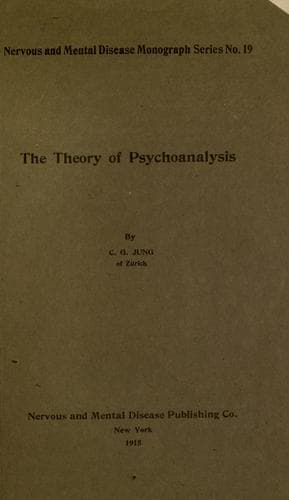
The Theory of PsychoanalysisJung, C. G. (Carl Gustav)
Science
The Theory of Psychoanalysis
Jung, C. G. (Carl Gustav)
Neuroses; Psychoanalysis; Psychology, Pathological; Sex
With the former historical conception of neurosis, we thought we
understood clearly why a neurotic person, with his powerful
parent-complex, had such great difficulty in adapting himself to life.
Now that we know that normal persons have the same complex, and in
principle have to pass through just the same psychological development
as a neurotic, we can no longer explain neurosis as a certain
development of phantasy-systems. The really illuminating way to put the
problem is a prospective one. We do not ask any longer if the patient
has a father- or a mother-complex, or unconscious incest-phantasies
which worry him. To-day, we know that every one has such things. The
belief that only neurotics had these complexes was an error. We ask now:
What is the task which the patient does not wish to fulfil? From which
necessary difficulties of life does the patient try to withdraw himself?
When people try always to adapt themselves to the conditions of life,
the libido is employed rightly and adequately. When this is not the
case, the libido is stored up and produces regressive symptoms. The
inadequate adaptation, that is to say, the abnormal indecision of
neurotics in face of difficulties, is easily accounted for by their
strong subjection to their phantasies, in consequence of which reality
seems to them, wholly or partly, more unreal, valueless and
uninteresting than to normal people. These heightened phantasies are the
results of innumerable regressions. The ultimate and deepest root is the
innate sensitiveness, which causes difficulties even to the infant at
the mother’s breast, in the form of unnecessary irritation and
resistances. Call it sensitiveness or whatever you like, this unknown
element of predisposition is in every case of neurosis.
The Etiological Significance of Phantasy Criticized
Public-domain text, read in full here on John Shaqi.
Reviews
Reviews
No reviews yet
Be the first to share your thoughts on this work.
Elsewhere in the archive
Join the Discussion
Join the discussion
Sign in to leave a comment or review.
Sign InorCreate an account