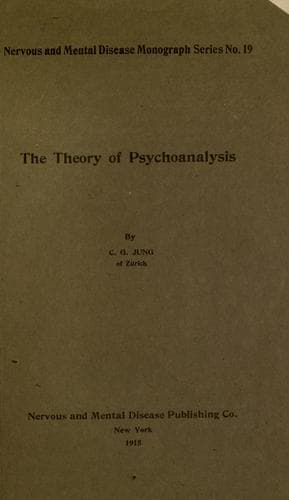
The Theory of PsychoanalysisJung, C. G. (Carl Gustav)
Science
The Theory of Psychoanalysis
Jung, C. G. (Carl Gustav)
Neuroses; Psychoanalysis; Psychology, Pathological; Sex
CHAPTER IX
The Therapeutical Principles of Psychoanalysis
While the psychoanalyst, of course, knows of this therapeutic tendency
to extricate the patient from his unhealthy phantasies, he also knows
just how far this mere extricating of neurotic patients from their
phantasies goes. As physicians, we should never think of preferring a
difficult and complicated method, assailed by all authorities, to a
simple, clear and easy one without good reason. I am perfectly
well-acquainted with hypnotic suggestion, and with Dubois’ method of
persuasion, but I do not use these methods, on account of their relative
inadequacy. For the same reason, I do not use the direct “ré-éducation
de la volonté” as the psychoanalytic method gives me better results.
In applying psychoanalysis we must grant the regressive phantasies of
the patient, for psychoanalysis has a much broader outlook, as regards
the valuation of symptoms, than have the above psychotherapeutic
methods. These all emanate from the assertion that a neurosis is an
absolute morbid formation.
The reigning school of neurology has never thought of considering
neurosis as a healing process also, and of attributing to the neurotic
formations a quite special teleological meaning. Neurosis, like every
other disease, is a compromise between the morbid tendencies, and the
normal function. Modern medicine no longer considers fever as the
illness itself, but a purposeful reaction of the organism.
Psychoanalysis, likewise, no longer conceives a neurosis as eo ipso
morbid, but as also having a meaning and a purpose. From this there
follows the more reserved and expectant attitude of psychoanalysis
towards neurosis. Psychoanalysis does not judge the value of the
symptoms, but first tries to understand what tendencies lie beneath
these symptoms. If we were able to abolish a neurosis in the same way,
for instance, as a cancer is destroyed, then at the same time there
would be destroyed a great amount of available energy also. We save this
energy, that is, we make it serve the purposes of the instinct for
health, as soon as we can trace the meaning of these symptoms; by taking
part in the regressive movement of the patient. Those unfamiliar with
the essentials of psychoanalysis will have some difficulty in
understanding how a therapeutic effect can come to pass when the
physician takes part in the pernicious phantasies of the patient. Not
only critics, but the patients also, doubt the therapeutic value of such
a method, which concentrates attention upon phantasies which the patient
rejects as worthless and reprehensible. The patients will often tell you
that their former physicians forbade them to occupy themselves with
their phantasies, and told them that they must only consider that it is
well with them, when they are free, if but momentarily, from their awful
torments. So, it seems strange enough that it should be of any use to
Public-domain text, read in full here on John Shaqi.
Reviews
Reviews
No reviews yet
Be the first to share your thoughts on this work.
Elsewhere in the archive
Join the Discussion
Join the discussion
Sign in to leave a comment or review.
Sign InorCreate an account