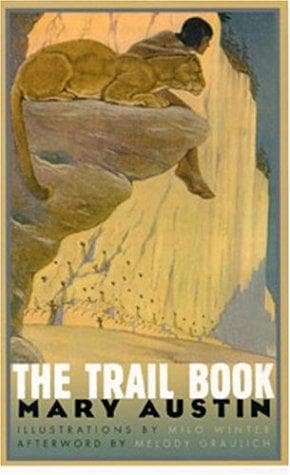
American Museum of Natural History -- Fiction; Indians of North America -- Fiction; Nature stories, American; Western stories
"The hand, no. It had been stretched forth only in kindness. But I think
white men do not understand about scalping. I have heard them talk
sometimes, and I know they do not understand. The scalp was taken in
order that they might have the scalp dance. The dance is to pacify the
spirit of the slain. It adopts and initiates him into the tribe of the
dead, and makes him one with them, so that he will not return as a
spirit and work harm on his slayers. Also it is a notice to the gods of
the enemy that theirs is the stronger god, and to beware. The scalp
dance is a protection to the tribe of the slayer; to omit one of its
observances is to put the tribe in peril of the dead. Thus I have heard;
thus the Old Ones have said. Even Two-Hearted, though he was sad for the
killing, danced for the scalp of Father Martin.
"Immediately it was all over, the Hawikuhkwe began to be afraid. They
gathered up their goods and fled to K'iakime, the Place of the Eagles,
on Thunder Mountain, where they had a stronghold. There were Iron Shirts
at Santa Fe and whole cities of them in the direction of the Salt
Containing Waters. Who knew what vengeance they might take for the
killing of the Padres? The Hawikuhkwe intrenched themselves, and for
nearly two years they waited and practiced their own religion in
their own way.
"Only two of them were unhappy. These were Ho-tai of the two hearts, and
his wife, who had been called Flower-of-the-Maguey. But her unhappiness
was not because the Padres had been killed. She had had her hand in that
business, though only among the women, dropping a word here and there
quietly, as one drops a stone into a deep well. She was unhappy because
she saw that the dead hand of Father Letrado was still heavy on her
husband's heart.
"Not that Ho-tai feared what the soldiers from Santa Fe might do to the
slayer, but what the god of the Padre might do to the whole people. For
Padre Letrado had taught him to read in the Sacred Books, and he knew
that whole cities were burned with fire for their sins. He saw doom
hanging over K'iakime, and his wife could not comfort him. After awhile
it came into his mind that it was his own sin for which the people would
be punished, for the one thing he had kept from the Padre was the secret
of the gold.
"It is true," said the Condor, "that after the Indians had forgotten
them, white men rediscovered many of their sacred places, and many
others that were not known even to the Zunis. But there is one place on
Thunder Mountain still where gold lies in the ground in lumps like pine
nuts. If Father Letrado could have found it, he would have hammered it
into cups for his altar, and immediately the land would have been
overrun with the Spaniards. And the more Ho-tai thought of it, the more
convinced he was that he should have told him.
Public-domain text, read in full here on John Shaqi.
Reviews
Reviews
No reviews yet
Be the first to share your thoughts on this work.
Elsewhere in the archive
Join the Discussion
Join the discussion
Sign in to leave a comment or review.
Sign InorCreate an account