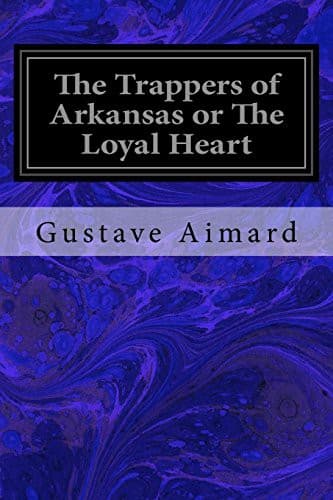
The Trappers of Arkansas; or, The Loyal HeartAimard, Gustave
General
The Trappers of Arkansas; or, The Loyal Heart
Aimard, Gustave
Arkansas -- Fiction; Frontier and pioneer life -- West (U.S.) -- Fiction; Trappers -- Fiction; Western stories
The arrival of the hunters, together with the voice of Loyal Heart,
which she soon recognized, restored her to hope; she left the place of
her concealment, and had impatiently waited for a favourable moment to
present herself.
The hunters were wonderstruck at a recital at once so simple and so
affecting; they cordially congratulated the young lady upon her courage
and presence of mind, which alone had saved her.
When a little order was re-established in the camp Loyal Heart waited
upon Doña Luz.
"Señora," he said, "it will not be long before day appears; when you
have taken a few hours' repose, I will conduct you to my mother, who is
a pious, good woman; when she knows you, I feel certain she will love
you as a daughter. And then, as soon as you are in safety, I will set
earnestly about restoring your uncle to you."
Without waiting for the thanks of the young lady, he bowed respectfully,
and left the tent.
When he had disappeared, Doña Luz sighed, and sank pensively down upon a
seat.
CHAPTER VIII.
THE CAVERN OF VERDIGRIS.
Ten days had passed away since the events related in our last chapter.
We will conduct the reader, between three and four o'clock in the
afternoon, into the grotto discovered by Belhumeur, of which Loyal Heart
had made his chosen habitation.
The interior of the cavern, lighted by numerous torches of that wood
which the Indians call candlewood, which burned, fixed at distances on
the projections of the rock, presented the aspect of a halt of gipsies,
or of an encampment of bandits, whichever the stranger might fancy, who
should chance to be admitted to visit it.
Forty trappers and Comanche warriors were dispersed about here and
there; some were sleeping, others smoking, other cleaning their arms or
repairing their clothes; a few, crouching before two or three fires,
over which were suspended cauldrons, and where enormous joints of
venison were roasting, were preparing the repast for their companions.
At each place of issue two sentinels, motionless, but with eyes and ears
on the watch, silently provided for the common safety.
In a compartment separated naturally from the larger one by a block of
projecting rock, two women and a man, upon seats rudely cut with the
hatchet, were conversing in a low voice.
The two women were Doña Luz and the mother of Loyal Heart; the man
who looked at them, while smoking his husk cigarette, and mingled
occasionally in the conversation by an interjection drawn from him by
surprise, admiration, or joy, was Eusebio, the old Spanish servant, of
whom we have often spoken in the course of our narrative.
At the entrance of this compartment, which formed a kind of separate
chamber in the cavern, another man was walking backwards and forwards,
with his hands behind his back, whistling between his teeth an air which
he probably composed as his thoughts dictated.
This man was Black Elk.
Loyal Heart, Eagle Head, and Belhumeur were absent.
Public-domain text, read in full here on John Shaqi.
Reviews
Reviews
No reviews yet
Be the first to share your thoughts on this work.
Elsewhere in the archive
Join the Discussion
Join the discussion
Sign in to leave a comment or review.
Sign InorCreate an account