Women -- Suffrage -- Great Britain -- Fiction; World War, 1914-1918 -- Great Britain -- Fiction
He thought: "I don't know where they're all going to end. They think
they're beginning something tremendous; but I can't see what's to come
of it. And I don't see how they can go on like that for ever. I can't
see what's coming. Yet something must come. _They_ can't be the end."
He thought: "Their movement is only a small swirl in an immense Vortex.
It may suck them all down. But it will clear the air. They will have
helped to clear it."
He thought of himself going on, free from the whirl of the Vortex, and
of his work as enduring; standing clear and hard in the clean air.
PART III
VICTORY
XVIII
It was July, nineteen-fourteen, a month remarkable in the British Isles
because of the fine weather and the disturbances in the political
atmosphere due to the fine weather.
Every other evening in that July Anthony Harrison reminded his family
that fine weather is favourable to open-air politics, and that the mere
off-chance of sunstroke is enough to bring out the striker. And when
Michael asked him contentiously what the weather had to do with Home
Rule, he answered that it had everything to do with it by increasing
parliamentary blood-pressure.
"Wait," he said, "till we get a good thunderstorm You'll see how long
the strike'll last, and what Sir Edward Carson has to say to Mr.
Redmond then."
Anthony kept his head. He had seen strikes before, and he knew that Home
Rule had never been a part of practical politics and never would be.
And Michael and Dorothea laughed at him. They had their own views about
the Home Rule question and the Labor question, and they could have told
Anthony what the answers were going to be; only they said it wasn't any
good talking to Father; when he got an idea into his dear old head it
stuck there.
Now, on Mother, if you talked to her long enough, you could make some
impression; you could get ideas into her head and you could get
them out.
Frances, no longer preoccupied with the care of young children, had time
for the affairs of the nation. She was a more intelligent woman than the
Mrs. Anthony Harrison who, nineteen years ago, informed herself of the
affairs of the nation from a rapid skimming of the _Times_. In the last
four years the affairs of the nation had thrust themselves violently
upon her attention. She had even realized the Woman's Suffrage movement
as a vivid and vital affair, since Dorothy had taken part in the
fighting and had gone to prison.
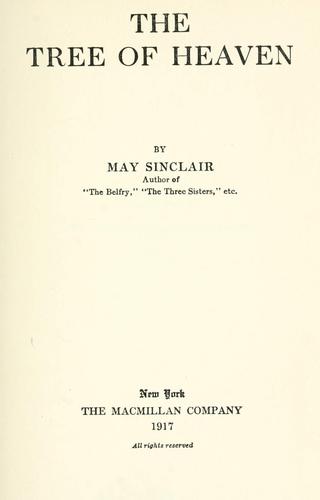
Frances, sitting out this July under her tree of Heaven with the
_Times_, had a sense of things about to happen if other things didn't
happen to prevent them. At any rate she had no longer any reason to
complain that nothing happened.
It was the Home Rule crisis now. The fact that England and Ireland were
on the edge of civil war was brought home to her, not so much by the
head-lines in the papers as by the publication of her son Michael's
insurgent poem, "Ireland," in the Green Review.
Public-domain text, read in full here on John Shaqi.
Reviews
Reviews
No reviews yet
Be the first to share your thoughts on this work.
Elsewhere in the archive
Join the Discussion
Join the discussion
Sign in to leave a comment or review.
Sign InorCreate an account