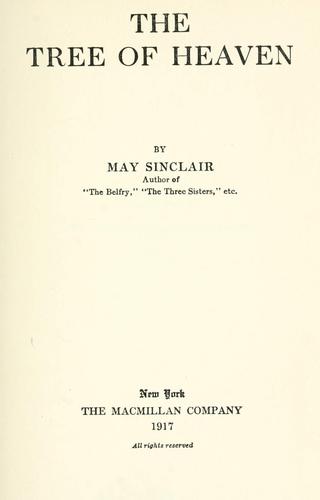
Women -- Suffrage -- Great Britain -- Fiction; World War, 1914-1918 -- Great Britain -- Fiction
Yet Rosalind had not changed. She was still the school-girl slacker who
could never do a stroke of work until somebody had pushed her into it,
who could never leave off working until stopped by the same hand that
had set her going. Her power to go, and to let herself rip, and the
weakness that made her depend on Dorothy to start her were the qualities
that attracted Dorothy to Rosalind from the beginning. But now she was
the tool of the fighting Suffrage Women. Or if she wasn't a tool, she
was a machine; her brain was a rapid, docile, mechanical apparatus for
turning out bad imitations of Mrs. Palmerston-Swete and the two
Blathwaites. Her air of casual command, half-swagger, half-slouch, her
stoop and the thrusting forward of her face, were copied sedulously from
an admired model.
Dorothy found her pitiable. She was hypnotized by the Blathwaites who
worked her and would throw her away when she was of no more use. She
hadn't the strength to resist the pull and the grip and the drive of
other people. She couldn't even hold out against Valentina Gilchrist and
Maud Blackadder. Rosalind would always be caught and spun round by any
movement that was strong enough. She was foredoomed to the Vortex.
That was Dorothy's fault. It was she who had pushed and pulled the
slacker, in spite of her almost whining protest, to the edge of the
Vortex; and it was Rosalind, not Dorothy, who had been caught and sucked
down into the swirl. She whirled in it now, and would go on whirling,
under the impression that her movements made it move.
The Vortex fascinated Dorothy even while she resisted it. She liked the
feeling of her own power to resist, to keep her head, to beat up against
the rush of the whirlwind, to wheel round and round outside it, and
swerve away before the thing got her.
For Dorothy was afraid of the Feminist Vortex, as her brother Michael
had been afraid of the little vortex of school. She was afraid of the
herded women. She disliked the excited faces, and the high voices
skirling their battle-cries, and the silly business of committees, and
the platform slang. She was sick and shy before the tremor and the surge
of collective feeling; she loathed the gestures and the movements of the
collective soul, the swaying and heaving and rushing forward of the many
as one. She would not be carried away by it; she would keep the
clearness and hardness of her soul. It was her soul they wanted, these
women of the Union, the Blathwaites and the Palmerston-Swetes, and
Rosalind, and the Blackadder girl and the Gilchrist woman; they ran out
after her like a hungry pack yelping for her soul; and she was not going
to throw it to them. She would fight for freedom, but not in their way
and not at their bidding.
Public-domain text, read in full here on John Shaqi.
Reviews
Reviews
No reviews yet
Be the first to share your thoughts on this work.
Join the Discussion
Join the discussion
Sign in to leave a comment or review.
Sign InorCreate an account