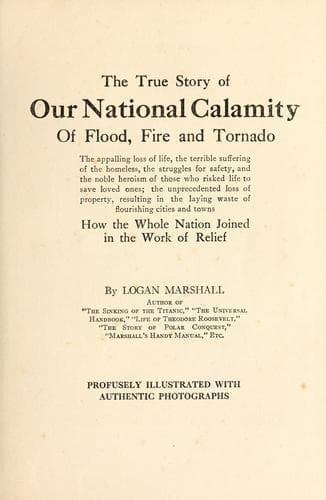
The True Story of Our National Calamity of Flood, Fire and TornadoMarshall, Logan
History
The True Story of Our National Calamity of Flood, Fire and Tornado
Marshall, Logan
Floods -- Ohio River Valley; Omaha (Neb.) -- Tornado, 1913
With the break of day on March 27th, disorder and terror prevailed
throughout the whole city. The Muskingum, in its rampage, was sixteen
feet higher than the previous record mark set in 1898. The city was one
vast lake and the waters covered the valley from hill to hill. Only the
buildings high on the sides of the slopes escaped the ravages of the
deluge. The water varied in depth from one to fifteen feet. Many lives
were sacrificed.
Six hundred buildings were torn from their foundations and swept away by
the mill race currents, while many others collapsed and were hurled
against those still holding.
The water reached a depth of eight inches in the Clarendon and Rogge
hotels at noon on Thursday. The court house was surrounded.
In sections which were bearing the brunt of the deluge little could be
done to relieve the people who were marooned in their houses and in the
large buildings. Every effort was being directed by the city officials
and volunteer relief parties to lend aid to the sufferers, but the
swift, onward rush of the waters made the undertaking extra hazardous.
The authorities turned their efforts toward relieving the suffering of
women and children driven from their homes by the high water, and some
progress had been made. Putnam lay in ruins. Muskingum and Linden
Avenues had been washed out, and where three days before stood many
residences, watchers from the highest buildings saw nothing but a waste
of swirling waters.
MARIETTA FLOODED
The valley between Zanesville and Marietta became a surging lake, which
picked up buildings and everything movable and carried them along with
incredible speed. The loss of property was tremendous.
Marietta suffered from the swollen waters of both the Muskingum and Ohio
Rivers. The situation was serious on Wednesday; by Sunday it was
alarming. At eight o'clock Saturday morning the river had reached the
stage of 60.6 and was still rising. All the business section of the town
was flooded and many residences were under water. There were no public
utilities in operation and food and medical supplies were sorely needed.
There were many rumors concerning loss of life, but the swift current
prevented communication to those parts of the city where persons were
reported drowned.
Immediately upon reciept of the message from Whipple, a station on the
Marietta Branch of the Pennsylvania Railroad, that Marietta was under
water, preparations were made by the railroad company to send out a
relief train from Cambridge. It reached Whipple Saturday night and from
there help was brought to the distressed city.
SCIOTO RIVER AT CIRCLEVILLE
The flooded Scioto River, which surged through the streets of Columbus,
carried destruction down through farm lands and towns to the Ohio River.
Circleville, Chillicothe and Portsmouth, being the principal towns on
the river course, suffered most.
Public-domain text, read in full here on John Shaqi.
Reviews
Reviews
No reviews yet
Be the first to share your thoughts on this work.
Elsewhere in the archive
Join the Discussion
Join the discussion
Sign in to leave a comment or review.
Sign InorCreate an account