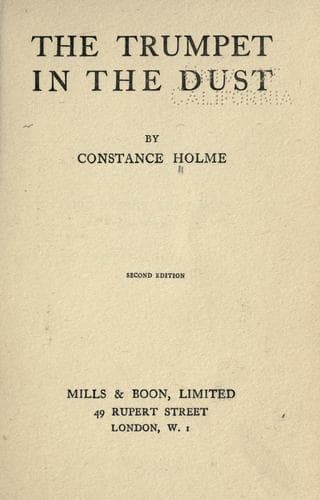
Almshouses -- Fiction; Older women -- Fiction; Villages -- England -- Fiction; Women cleaning personnel -- Fiction
The social basis having been firmly established, it was possible
now to descend to charing. Mrs. Clapham’s audience was pleased to
discover that she was not above talking about her trade, or even
discussing the houses into which that trade had happened to take
her. Not that she gave them the racy bits of gossip which they would
undoubtedly have liked best, but there was always the chance that she
might come to those when they knew her better. But she was able to
give them portraits of the families who had passed through her hands
during twenty to thirty years, finishing them off with such deftness
that they almost stood there before their eyes. She told them, for
instance, of the numerous branches of the bewildering Bullers, who
had relatives everywhere in the British Isles, and would probably
have had them in the Cocos Islands, if they had been allowed. She
told them how young Mr. Banbury-Wilson always insisted upon hanging
his own curtains, and how old Mr. Wrench simply wouldn’t wipe his
feet on the mat. She told them of children, animals, and even ghosts;
and of servants who were a good deal worse than any possible ghost.
She told them of little kindnesses received, and little presents; and
sometimes of little cheatings and slights. And over all these things
she cast a glamour that was all her own, concocting a brave draught
to slake the almshouse thirst for “life.”
But she said nothing to them about the deeper things which had
happened to come her way, and which even now she could scarcely
remember without a rush of her ready tears. She did not mention the
sorrows supposed to be dead or dumb, which yet rose up and spoke
to you as soon as you went in. She told them nothing of parents and
children who hated each other, or husbands and wives; of poverty
borne bravely, wealth frittered, sickness carried like a jewelled
cross. Least of all did she speak of the moments when she herself had
risen to some crisis of fear or death; when frightened and helpless
women had hung weeping about her neck, and relieved or grief-stricken
men had wrung her gratefully by the hand....
Even without these things, however, she had plenty to say, and all of
it full of a fine human touch. It was the epic of Mrs. Clapham’s life
that was spoken that afternoon, even though the greater part of it
was spoken only to her own soul. She was a trained talker, of course,
like most women of her trade, but never before had she talked like
this. It was as if the story of all the years had found its rightful
moment of vent, now that the work of those years had come to its
peaceful and fruitful end.
Public-domain text, read in full here on John Shaqi.
Reviews
Reviews
No reviews yet
Be the first to share your thoughts on this work.
Elsewhere in the archive
Join the Discussion
Join the discussion
Sign in to leave a comment or review.
Sign InorCreate an account