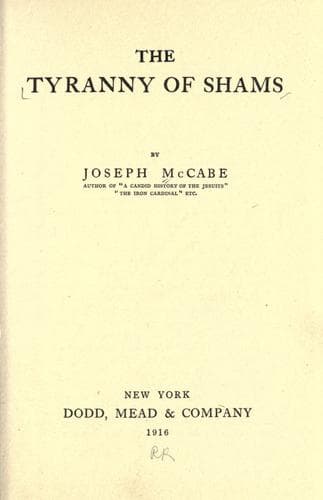
Great Britain -- Social conditions; Moral conditions; Social problems
It is, as I said, clear that if a man or woman marries on a strict
monogamous contract, and holds his or her partner to that contract,
there is a plain obligation of justice to adhere to it. If, on the
other hand, a man and woman choose to marry on any other
understanding, or choose to grant each other (as is now frequently
done) a greater liberty than the contract implies, their behaviour is
entirely their own concern, and no moralist who takes his stand on
purely social grounds has anything to say to it. In regard to
unmarried intercourse, it is further plain that a man commits an
immoral or anti-social act who entails on an unmarried woman the grave
injury which child-bearing does entail in our social order generally.
It must, however, be recognised that guilt is in this case entirely
relative to circumstances. Where public opinion does not make a pariah
of such a woman, where no risk of suffering is involved, such an act
of "free love" is no concern of the social moralist. Hence, if two
people of mature intelligence, making a just provision for possible
children, choose to live together without marriage, it is entirely
their own concern; and if any woman, strong and judicious enough to
take the responsibility of her acts, chooses love without marriage, it
is her own concern.
If there seems to be an unfamiliar coldness and deliberation about
this defence of "licence," it is enough to recall the familiar
circumstances. One cannot, as a rule, inquire dispassionately into
this subject without raising an hysterical storm. The clergy and other
puritans accuse a man of the basest and most selfish motives; they
seem, indeed, so incapable of understanding that a man may plead for
this moral reconstruction on motives at least as unselfish and
elevated as their own that their obtuseness does little credit to
their own moral physiognomy. They make fanatical appeals to
undiscriminating prejudice, repeat silly phrases about "passion"
and "farmyard morals," and rely on intimidation. The consequence
is, that ordinary folk openly bow to their rhetoric and secretly
ignore it. Any properly observant person can find out in a week to
what extent London observes the virtue of purity. It is then left to
rebellious poets and novelists and other artists to make fiery
onslaughts on the tyranny: to speak of virtue as "the ash of a
burnt-out fire," to chant "the roses and raptures of vice," or
to say scornfully with Blake:
"And priests in black gowns were walking their rounds,
And binding with briars my joys and desires."
Public-domain text, read in full here on John Shaqi.
Reviews
Reviews
No reviews yet
Be the first to share your thoughts on this work.
Elsewhere in the archive
Join the Discussion
Join the discussion
Sign in to leave a comment or review.
Sign InorCreate an account