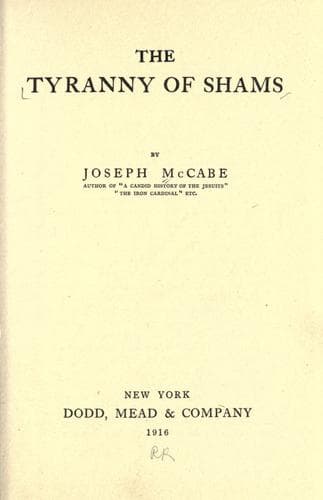
Great Britain -- Social conditions; Moral conditions; Social problems
I am speaking, in the main, of the mass of the workers, but it would
be entirely unjust to insinuate that they alone need adult education.
The conventions of social life, the extraordinary slavery to fashions
and artificial rules, betray an intellectual flabbiness in the
wealthier members of society which just as urgently calls for
stimulation. We seem at times quite incapable of drawing a line
between acts of real courtesy and taste, which imply a certain grace
or delicacy of character, and conventional usages which have no
rational basis. The insistence on these conventional usages is part of
that general slavery to false traditions which I am assailing.
The most flagrant instance of this weakness of mind and character is
the docility with which we meet changes of fashion in dress, or retain
eccentric forms of clothing. Hardly any other feature so strongly
impresses the close observer with the fact that the race, as a whole
(and I speak only of civilised communities), advances little in
intelligence and self-possession in spite of the progress made by its
intellectual experts. One would say that here, especially, we need a
strong draught of the philosophy of Friedrich Nietzsche,--the gospel
of self-assertion, of strong personality, of severe reasoning,--but I
have not observed that our modern Nietzscheans differ much from their
neighbours in such matters. Yet the commercial expansion of modern
times is making this tyranny of fashion more ludicrous than it ever
was before.
The fashion-plates and descriptions contained in ladies' journals
have always provoked the furtive smile of the male. A coterie of
tradesmen, who are eager to promote business, and of wealthy ladies
who are equally eager to show that their purses are unlimited, decree
that the hat or costume shall continually vary in shape and colour.
The Anglo-French jargon of the sartorial journalist then impresses on
a larger circle of ladies the need of alertness and the horror of
being _démodée_,--it would be proof of incapacity to say "out of
fashion,"--and, as the season approaches, the proclamation of the
forthcoming colour or model is awaited with more feverish anxiety than
the announcement of the national budget. Schools of artists are
secretly inventing some variation--the wider the variation the
better--on the thousands of costumes which have already graced the
feminine frame, or discussing bold suggestions of reviving an ancient
model which has long disappeared even from the shops of
wardrobe-dealers. Privileged ladies rise in prestige by obtaining and
whispering advance information. At length the shop-windows blaze with
the new colour, the journals depict an ingenious new combination of
edges and folds and puckers, and womanhood plunges to the bottom of
its purse with an eagerness to avoid the suspicion of financial
stringency; while the discarded hats and dresses percolate
romantically through lower strata of society. Is it not good for
trade?
Public-domain text, read in full here on John Shaqi.
Reviews
Reviews
No reviews yet
Be the first to share your thoughts on this work.
Elsewhere in the archive
Join the Discussion
Join the discussion
Sign in to leave a comment or review.
Sign InorCreate an account