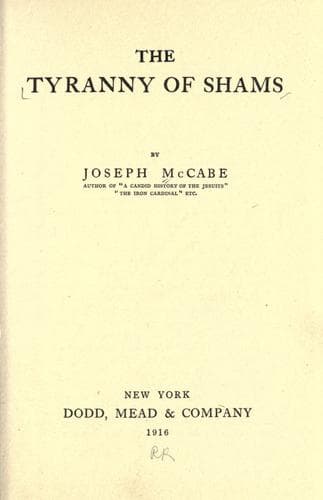
Great Britain -- Social conditions; Moral conditions; Social problems
IN the last sentence of the last chapter I spoke of education,
pacification, and industrial organisation as the three monumental
tasks of a reformed political system. If the supreme object of a
central administration--the sooner we cease to talk of "government"
the better--is to make a people healthy, prosperous, and happy,
these are surely the three reforms to which it will most resolutely
apply itself. I have spoken of the very grave and pressing
nature of one of these reforms: the need to abolish militarism and
war. Later chapters will deal with education, in the very broad and
rich meaning which I assign to the word. Here I would sketch the
problem which seems to me to weigh heavily on us in connection with
the distribution of wealth and the present disorganisation of
industry.
It is useful sometimes to imagine ourselves in the year 3000 or so
looking back with critical eye on the twentieth century. One pictures
the future historian--some narrowly specialised expert on the social
life of the second decade of the twentieth century--discoursing on us.
A strange and interesting people, he will say. They boasted of their
intelligence, and they really did display a creditable measure of
intelligence in their research and their applied science. They
regarded themselves as far superior in humane sentiment to the Middle
Ages, to which they properly belong, and they put forward many
excellent vague proposals of social improvement. Yet it is not easy to
understand their slavery to ancient prejudices, sometimes of a quite
barbaric character. A superficial observer would say that the
contradiction was due to their unhappy practice of leaving the
majority of the community at a low level of culture, so that the
intelligent minority were checked by a slower-minded majority. But it
is a singular fact that some of the most intelligent men among the
minority, such as Mr. A. Balfour and Mr. F. E. Smith, held much the
same views as the agricultural workers, and made a kind of religion,
which they called Conservatism, of this obstinate retention of old
traditions. They seem, with all their pride in their culture, to have
mistaken their place in the evolution of the race. No people is
entitled to be called civilised which complacently tolerates war,
squalid and widespread poverty, dense areas of ignorance, political
corruption, and the many other remnants of barbarism which they
tolerated. The twentieth century was the last hour of barbarism, lit
by a few rays of the civilisation which dawned in the twenty-first
century.
Public-domain text, read in full here on John Shaqi.
Reviews
Reviews
No reviews yet
Be the first to share your thoughts on this work.
Elsewhere in the archive
Join the Discussion
Join the discussion
Sign in to leave a comment or review.
Sign InorCreate an account