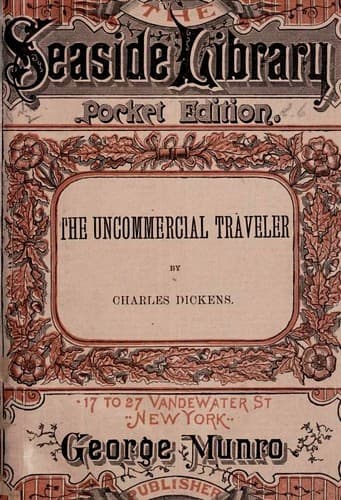
Great Britain -- Social conditions -- 19th century; London (England) -- Description and travel
My first funeral, a fair representative funeral after its kind, was that
of the husband of a married servant, once my nurse. She married for
money. Sally Flanders, after a year or two of matrimony, became the
relict of Flanders, a small master builder; and either she or Flanders
had done me the honour to express a desire that I should ‘follow.’ I may
have been seven or eight years old;—young enough, certainly, to feel
rather alarmed by the expression, as not knowing where the invitation was
held to terminate, and how far I was expected to follow the deceased
Flanders. Consent being given by the heads of houses, I was jobbed up
into what was pronounced at home decent mourning (comprehending somebody
else’s shirt, unless my memory deceives me), and was admonished that if,
when the funeral was in action, I put my hands in my pockets, or took my
eyes out of my pocket-handkerchief, I was personally lost, and my family
disgraced. On the eventful day, having tried to get myself into a
disastrous frame of mind, and having formed a very poor opinion of myself
because I couldn’t cry, I repaired to Sally’s. Sally was an excellent
creature, and had been a good wife to old Flanders, but the moment I saw
her I knew that she was not in her own real natural state. She formed a
sort of Coat of Arms, grouped with a smelling-bottle, a handkerchief, an
orange, a bottle of vinegar, Flanders’s sister, her own sister,
Flanders’s brother’s wife, and two neighbouring gossips—all in mourning,
and all ready to hold her whenever she fainted. At sight of poor little
me she became much agitated (agitating me much more), and having
exclaimed, ‘O here’s dear Master Uncommercial!’ became hysterical, and
swooned as if I had been the death of her. An affecting scene followed,
during which I was handed about and poked at her by various people, as if
I were the bottle of salts. Reviving a little, she embraced me, said,
‘You knew him well, dear Master Uncommercial, and he knew you!’ and
fainted again: which, as the rest of the Coat of Arms soothingly said,
‘done her credit.’ Now, I knew that she needn’t have fainted unless she
liked, and that she wouldn’t have fainted unless it had been expected of
her, quite as well as I know it at this day. It made me feel
uncomfortable and hypocritical besides. I was not sure but that it might
be manners in _me_ to faint next, and I resolved to keep my eye on
Flanders’s uncle, and if I saw any signs of his going in that direction,
to go too, politely. But Flanders’s uncle (who was a weak little old
retail grocer) had only one idea, which was that we all wanted tea; and
he handed us cups of tea all round, incessantly, whether we refused or
not. There was a young nephew of Flanders’s present, to whom Flanders,
it was rumoured, had left nineteen guineas. He drank all the tea that
was offered him, this nephew—amounting, I should say, to several
quarts—and ate as much plum-cake as he could possibly come by; but he
Public-domain text, read in full here on John Shaqi.
Reviews
Reviews
No reviews yet
Be the first to share your thoughts on this work.
Elsewhere in the archive
Join the Discussion
Join the discussion
Sign in to leave a comment or review.
Sign InorCreate an account