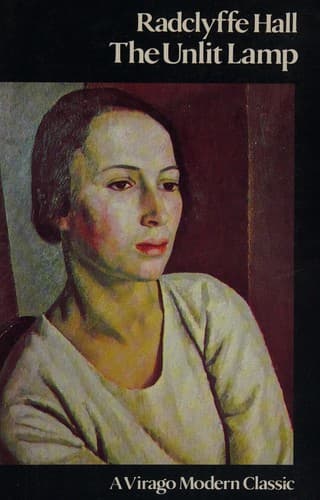
England -- Fiction; Mothers and daughters -- Fiction
It was summer now and still Mrs. Ogden wore her heavy mourning; she
looked frailer than ever in the long crape veil, and her pathetic eyes
seemed to have grown dim with too much weeping. Seabourne elected to
pity her, and looked askance at Joan. Not that Mrs. Ogden ever accused
her daughter of heartlessness; she only implied it, together with her
own maternal devotion. People thought her a helpless little woman,
worthy of better treatment at the hands of that queer, cranky girl of
hers. They began to talk at Joan rather than to her.
2
The loss of her money had had an entirely unexpected effect on Milly,
who had not raged after all, but had just smiled disagreeably. "I knew
he'd do something devilish," she said, "and how like him to die and
leave us to bear the brunt."
If she fretted she did so silently, taking no one into her confidence;
it was curiously unlike the old Milly. At eighteen she was beautiful,
with the doll-like beauty that would some day become distressing, the
beauty that would never weather pleasantly.
Her little violin master had wrung his hands at the news of her
misfortune; to him the disaster meant the end of his hopes, the end of a
life-long ambition. Tears had stood in his eyes when Milly told him what
had happened; he had put his arm around her, thinking that she must be
in need of consolation, but she had flung away from him with a laugh.
Mrs. Ogden behaved as though her younger daughter were non-existent, and
Elizabeth, though she saw that all was very far from well, had become
absorbed in her own troubles and held her peace. Joan, on the other
hand, watched her sister with increasing apprehension; she felt that
this unnatural calm could not go on.
In the circumstances, it was too foreign to Milly's nature, an alien and
unwholesome thing that might some day give place to a whirlwind.
Milly still played her violin, but lately there was something defiant,
almost cruel, in her playing; she played now because she must and not
because she wanted to. She appeared to have grown calmly frivolous, but
there was no joy in her frivolity, or so it seemed to Joan; it was
premeditated. The society of Seabourne welcomed her advent with
enthusiasm; it found her bright and amusing. Her principal pleasure was
now lawn tennis, which absorbed her during the summer months; she was
bidding fair to become a star player, and she and Mr. Thompson of the
circulating library vied with each other in amiable competition.
Mr. Thompson was sleeker than ever, and slightly impertinent in his
manner, Joan thought; his hair shone and his flannels were immaculate.
"No, reely now, Miss Milly, reely now!" he protested, failing to take
her service after an exaggerated effort. It became quite usual for him
to see her home in the evenings, carrying her racket confidentially
under his arm.
Joan said: "I can't understand you, Milly; why on earth do you treat
that bounder as if he were one of us?"
But Milly only smiled and held her peace.
Public-domain text, read in full here on John Shaqi.
Reviews
Reviews
No reviews yet
Be the first to share your thoughts on this work.
Elsewhere in the archive
Join the Discussion
Join the discussion
Sign in to leave a comment or review.
Sign InorCreate an account