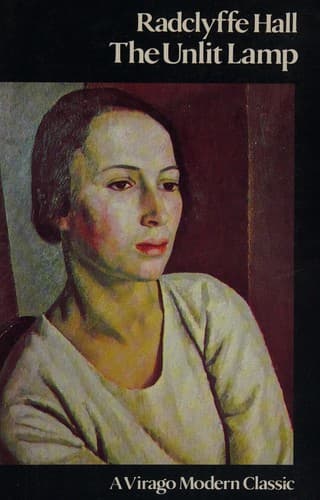
England -- Fiction; Mothers and daughters -- Fiction
"To think," Mrs. Ogden burst out suddenly, "to think that a daughter of
mine could stoop to a vulgar intrigue with a common young man in a shop!
Could--oh! I simply can't bring myself to say it--but could--well, go to
such lengths that he ought to marry her. It's too horrible! It's on a
par with our servant Rose, years ago; that was the milkman, and now it's
my own flesh and blood--a Routledge!"
Joan sighed impatiently. "Good Lord! Mother, what does it matter who it
is, a Routledge or a Rose Smith, it's all the same impulse."
Mrs. Ogden winced. "Please, _please_; surely there's no need to be so
coarse, Joan?"
"I'm not coarse, Mother. Life may be, but I'm not; I'm just looking
things squarely in the face. It seems to me that people have different
temperaments. Some are pure because they can't help it, and some are
impure because they can't help it. Milly likes men too much, and I like
them too little, but here we are, we're your daughters, Routledges if
you like, and all you can do is to make the best of it. It's horribly
hard on you, Mother, but the only way that I see out of it for Milly is
for her to go to the College. She'll probably forget this miserable
business when she has her music again." She paused.
Mrs. Ogden voiced a sudden, fearful thought. "Joan," she said faintly,
"will there--is there going to be a child?"
"No," said Joan. "I don't think you need fear that, from what Milly
tells me."
Mrs. Ogden fell back in her chair. "I think I'm going to faint," she
whispered, wiping her lips with trembling fingers. Joan went to her and,
lifting her bodily, sat down with her mother on her knee. "You can't
faint," she told her with the ghost of a smile. "We've no time for
fainting, dear; we must go into the accounts and see where the money's
to come from."
2
Milly took her scholarship and went to London. As the train moved slowly
from the platform, Joan had an overwhelming sense of something that
mattered. Was it Milly's departure? Perhaps. Milly's face had looked
very small and young peering from the window of the third-class
carriage, it had stirred Joan's protective instinct; yet her sister had
smiled and waved happily, filled with joy at her new-found independence.
But something had happened that did really matter, there was a change at
last; change for Milly, it must be that Milly had got out of the cage.
Why was Milly free while she, Joan, remained a prisoner? Was it because
Milly was heartless, a callous egoist? Milly did not submit, she took
the bit between her teeth and went at her own pace no matter who pulled
on the reins. And her own pace had led her not to destruction, as by all
the laws of morality it should have done, but to the actual goal of her
heart's desire; surely this was immoral, somehow?
Milly's letters were full of enthusiasm. She wrote:
Public-domain text, read in full here on John Shaqi.
Reviews
Reviews
No reviews yet
Be the first to share your thoughts on this work.
Elsewhere in the archive
Join the Discussion
Join the discussion
Sign in to leave a comment or review.
Sign InorCreate an account