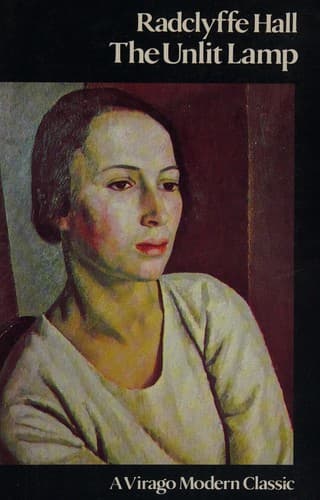
England -- Fiction; Mothers and daughters -- Fiction
Joan left her trunk untouched, and turned to the door. "All right, I'll
have it ready in a quarter of an hour," she said.
Mrs. Ogden looked at her with love in her eyes. "Oh, Joan, it's so good
to have you home again; I've missed you terribly."
Joan was silent.
CHAPTER THIRTY-THREE
1
THAT Christmas Mrs. Benson invited them to dinner, and, being cookless,
Mrs. Ogden accepted. Milly was delighted to escape from the dreaded
ordeal of Christmas dinner at home. Her holidays were becoming
increasingly distasteful. For one thing she missed the convivial student
life, the companionship of people who shared her own interests and
ambitions, their free and easy talk, their illicit sprees, their love
affairs and the combined atmosphere of animal passion and spiritual
uplift which they managed to create. She dearly loved the ceaseless
activity of the College, the hurrying figures on the stairs, the muffled
thud of the swing-doors. The intent, preoccupied faces of the students
inspired and fascinated her; their hands seemed always to be clutching
something, a violin case, a music roll. Their hands were never empty.
She felt less toleration than ever for her home, now that she had left
it; the fact that she was practically free failed to soften her judgment
of Seabourne; as she had felt about it in the past, so she felt now,
with the added irritation that it reminded her of Mr. Thompson.
Milly was not introspective and she was not morbid. A wider experience
of life had not tended to raise her standard of morality, and if she was
ashamed of the episode with Mr. Thompson, it was because of the partner
she had chosen rather than because of the episode itself. She was
humiliated that it should have been Mr. Thompson of the circulating
library, a vulgar youth without ambition, talent, or brain. The memory
of those hours spent in the sand-pit lowered her self-esteem, the more
so as the side of her that had rejoiced in them was in abeyance for the
moment, kept in subjection by her passion for her art. She watched the
students' turbulent love affairs with critical and amused eyes. Some
day, perhaps, she would have another affair of her own, but for the
present she was too busy.
In her mind she divided the two elements in her nature by a well-defined
gulf. Both were highly important, but different. Both were good in
themselves, inasmuch as they were stimulating and pleasurable, but she
felt that they could not combine in her as they so often did in her
fellow students, and of this she was glad.
Her work was the thing that really counted, as she had always known; but
if the day should come when her work needed the stimulus of her
passions, she was calmly determined that it should have it. She knew
that she would be capable of deliberately indulging all that was least
desirable in her nature, if thereby a jot or tittle could be gained for
her music.
Public-domain text, read in full here on John Shaqi.
Reviews
Reviews
No reviews yet
Be the first to share your thoughts on this work.
Elsewhere in the archive
Join the Discussion
Join the discussion
Sign in to leave a comment or review.
Sign InorCreate an account