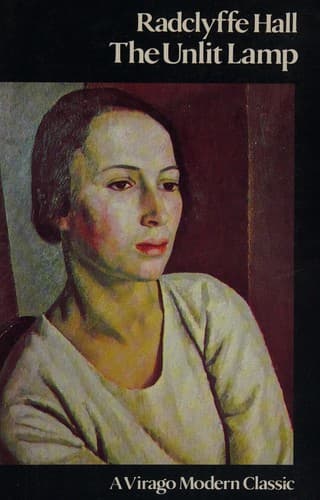
England -- Fiction; Mothers and daughters -- Fiction
MILLY'S death had aged Mrs. Ogden; she did not speak of it on every
occasion as she had of her widowhood, but seemed rather to shrink from
any mention of the subject, even by Joan. The sudden, awful climax of an
illness which she had persisted in regarding lightly; the emergence of
the horrid family skeleton of disease in one of her own children, the
fact that Milly had died so young and that she had never been able to
love her as she loved Joan, all combined to make an indelible impression
which she bore plainly on her face. People said with that uncompromising
truthfulness which is apt to accompany sympathy: "Poor thing, she does
look old, and she used to be such a pretty woman; she's got no trace of
that now, poor soul." And it was true; her soft hair had lost its gloss
and begun to thin; her eyes, once so charmingly brown and pathetic, were
paler in colour and smaller by reason of the puffiness beneath them. She
stooped a little and her figure was no longer so girlish; there was a
vague spread about it, although she was still thin.
Her religion gripped her more firmly than ever, and Father Cuthbert was
now a constant visitor at Leaside. He and his "daughter," as he called
Mrs. Ogden, were often closeted together for a long time, and perhaps he
was able to console her, for she seemed less unhappy after these visits.
Joan watched this religious fervour with even greater misgivings than
she had had before; the fasting and praying increased alarmingly, but
she could not now find it in her heart to interfere. She wished that her
mother would talk about Milly; about her illness and death, or even
bring herself to take an interest in the selection of the tombstone. She
felt that anything would be better than this stony silence. But the
selection of the tombstone was left to Joan, for Mrs. Ogden cried
bitterly when it was mentioned.
Joan could not pretend that Milly had formed an essential part of her
life; in their childhood there had been no love lost between them, and
although there had been a certain amount of affection later on, it had
never been very strong. Yet for all this, she mourned her sister; the
instinct of protection that had chained her to Milly in her last illness
was badly shocked and outraged. That Milly's poor little fight for
self-expression should have ended as it had done, in failure and death,
seemed to her both cruel and unjust. She could not shake off a sense of
indignation against the Power that so ruthlessly allowed these things to
happen; she felt as though something had given her a rude mental shove,
from which she found it difficult to regain her balance.
Prayer with Joan had always been extemporary, indulged in at irregular
intervals, as the spirit moved her. But in the past she had been capable
of praying fervently at times, with a childlike confidence that Someone
was listening; now she did not pray at all, because she had nothing to
say.
Public-domain text, read in full here on John Shaqi.
Reviews
Reviews
No reviews yet
Be the first to share your thoughts on this work.
Elsewhere in the archive
Join the Discussion
Join the discussion
Sign in to leave a comment or review.
Sign InorCreate an account