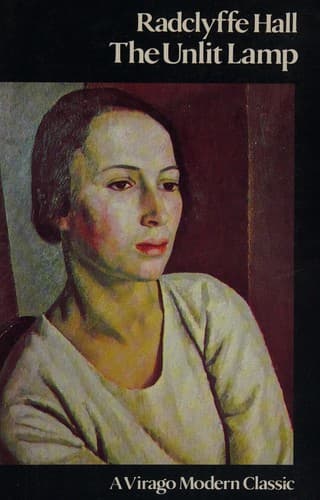
England -- Fiction; Mothers and daughters -- Fiction
Then there had been the subterfuge about her staying occasionally with
Elizabeth. She had said, in a voice that she had tried to make casual:
"Elizabeth has a flat of her own in London, and she could always put me
up when I was there." That had been a lie, pure and simple, because she
was a coward when it came to hurting people. She had tried to cloak her
real purpose, and her mother had seen through her with humiliating ease.
It was true enough that Mrs. Ogden would have to economize, and would
find herself in a better position to cope with the changed circumstances
if she took a flat just big enough for herself; but was that her only
motive for not wanting her mother to have a spare bedroom? She knew that
it was not. She despised herself for having descended to lies. Was she
becoming a liar? The answer was not far to seek; she had lied not only
to save her mother pain, but because she had not had the courage to say
straight out that she intended leaving her mother's home for that of
another woman. She had realized that in doing such a thing she was
embarking upon the unusual; this she had felt the moment she came to
putting her intention into words, and she had funked the confession.
She stopped to consider this aspect carefully. It was _unusual_, and
because it was unusual she had been embarrassed; a hitherto unsuspected
respect for convention had assailed her. She had never heard of any girl
of her acquaintance taking such a step, now that she came to think of
it. It was quite a common thing for men to share rooms with a friend,
and, of course, girls left home when they married. When they married.
Ah! that was the point, that was what made all the difference, as her
mother had pointed out. If she had been able to say: "I'm going to marry
Richard in August," even although the separation would still have been
there, she doubted whether, in the end, her mother would really have
offered any strenuous opposition. Pain she would have felt; she
remembered the scene with her mother that day long ago, when Richard had
proposed to her, but it would have been quite a different sort of pain;
there would have been less bitterness in the thought, because marriage
had the weight of centuries of custom behind it.
Centuries of custom, centuries of precedent! They pressed, they crushed,
they suffocated. If you gave in to them you might venture to hope to
live somehow, but if you opposed them you broke yourself to pieces
against their iron flanks. She saw it all; it was not her fault, it was
not her mother's fault. They were just two poor straws being asked to
swim against the current of that monster tyrant: "the usual thing!"
Public-domain text, read in full here on John Shaqi.
Reviews
Reviews
No reviews yet
Be the first to share your thoughts on this work.
Elsewhere in the archive
Join the Discussion
Join the discussion
Sign in to leave a comment or review.
Sign InorCreate an account