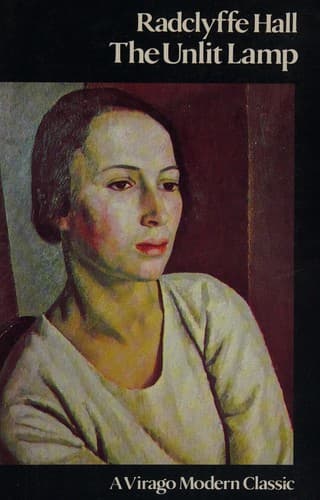
England -- Fiction; Mothers and daughters -- Fiction
She began to feel anxious about her mother. It was five minutes to ten;
what on earth was she doing? In another five minutes Elizabeth would
come with the fly. Her mother had told her to wait in the drawing-room,
but she could not wait much longer, she must go and find her. At that
moment the door opened quietly and Mrs. Ogden came in. She was all in
grey; a soft, pearly grey, the colour of doves' feathers. Her hair was
carefully piled, high on her head, and blended in softness and shine
with the grey of her dress; she must have bathed her eyes, for they
looked bright again and almost young. She came forward, stretching out
her arms.
Joan sprang up. "Mother! It's--why it's the old dress, the same dress
you wore years ago on our last Anniversary Day. Oh! I remember it so
well; that's the dress that made you look like a grey dove, I remember
thinking that." The outstretched arms folded round her. "What made you
put it on to-day?" she faltered, "it makes you look so pretty!"
Mrs. Ogden stroked her cheek. "I wanted you to remember me like this,"
she whispered. "And, Joan, this is Anniversary Day."
Joan started. "So it is," she stammered, "and I had forgotten."
The door-bell clanged loudly. "Let the charwoman answer it." said Mrs.
Ogden, "she's here this morning."
They heard the front door open and close.
"Joan!" came Elizabeth's voice from the hall. "Joan!"
No one answered, and in a moment or two Elizabeth had come into the
room. Joan and her mother were standing hand in hand, like two children.
Elizabeth said sharply: "Joan, we shall miss the train, are you ready?"
Joan let go of Mrs. Ogden's hand and stepped forward; she was deadly
pale and her eyes shone feverishly. When she spoke her voice sounded
dry, like autumn leaves crushed under foot.
"I'm not coming, Elizabeth; I can't leave her."
Elizabeth made a little inarticulate sound in her throat: "Joan!"
"I'm not coming, Elizabeth, I can't leave her."
"Joan, for the last time I ask you: Will you come with me?"
"No!" said Joan breathlessly. "No, I can't."
Elizabeth turned without another word and left the room and the house.
Joan heard the door clang dully after her, and the sound of wheels that
grew fainter and fainter as the fly lumbered away.
4
The queer days succeeded each other like phantoms. Looking back on the
week which elapsed between Elizabeth's going and her last letter, Joan
found that she could remember very little of that time, or of the days
that followed. She moved about, ate her food, got up and went to bed in
a kind of stupor, broken by moments of dreadful lucidity.
On the sixth day came the letter in the familiar handwriting. The paper
bore no address, only the date, "August, 1901;" a London postmark was on
the envelope.
Elizabeth wrote:
JOAN,
Public-domain text, read in full here on John Shaqi.
Reviews
Reviews
No reviews yet
Be the first to share your thoughts on this work.
Elsewhere in the archive
Join the Discussion
Join the discussion
Sign in to leave a comment or review.
Sign InorCreate an account