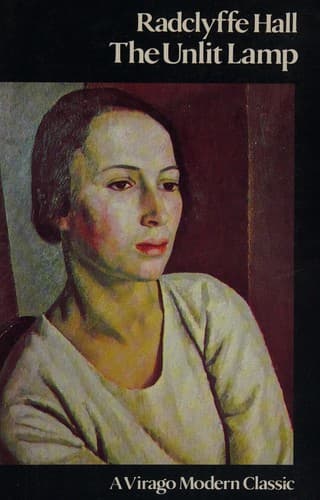
England -- Fiction; Mothers and daughters -- Fiction
One of them was in riding-breeches. They sat down with their backs to
the open window, through which their voices drifted. "Have you seen that
funny old thing with the short grey hair?"
"Yes, you mean the one at lunch? Wasn't she killing? Why moire ribbon
instead of a proper necktie?"
"And why a pearl brooch across her stiff collar?"
"I believe she's what they used to call a 'New woman,'" said the girl in
breeches, with a low laugh. "Honey, she's a forerunner, that's what she
is, a kind of pioneer that's I got left behind. I believe she's the
beginning of things like me. Oh! hang it all, I've left my gloves in the
garden; come on, we must look for them." And they went down the steps
again.
Joan laid down the newspaper and stared after them. Of course they had
not known that she was there. "A forerunner, a kind of pioneer that's
got left behind." She shoved the hair back from her forehead. Yes, they
were right, that was what she had been, a kind of pioneer, and now she
had got left behind. She saw the truth of this all round her, in women
of the type that she had once been, that in a way she still was. Active,
aggressively intelligent women, not at all self-conscious in their
tailor-made clothes, not ashamed of their cropped hair; women who did
things well, important things; women who counted and who would go on
counting; smart, neatly put together women, looking like well-bred young
men. They might still be in the minority and yet they sprang up
everywhere; one saw them now even at Seabourne during the summer season.
They were particular about their clothes, in their own way; the boots
they wore were thick but well cut, their collars immaculate, their ties
carefully chosen. But she, Joan Ogden, was the forerunner who had
failed, the pioneer who had got left behind, the prophet who had feared
his own prophecies. These others had gone forward, some of them released
by the war, others who had always been free-lances, and if the world was
not quite ready for them yet, if they had to meet criticism and ridicule
and opposition, if they were not all as happy as they might be, still
they were at least brave, whereas she had been a coward, conquered by
circumstances. A funny old thing with grey hair, who wore moire ribbon
instead of a necktie and a brooch in the wrong place; yes, that was what
she had come to in twenty years.
She sprang up and hurried out of the hotel. On her way to the town she
unfastened the pearl brooch and hurled it into the bushes. It was twenty
minutes to six. She arrived at the shop she wanted just as they were
putting up the shutters.
"I'm not too late, am I?" she inquired breathlessly.
The clerk behind the counter reassured her. "You've just ten minutes,
madam."
"Then show me some stiff collars, the newest pattern." She chose half a
dozen hastily. "And now some neckties, please."
Public-domain text, read in full here on John Shaqi.
Reviews
Reviews
No reviews yet
Be the first to share your thoughts on this work.
Elsewhere in the archive
Join the Discussion
Join the discussion
Sign in to leave a comment or review.
Sign InorCreate an account