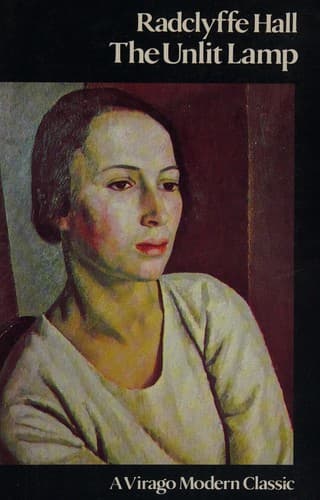
England -- Fiction; Mothers and daughters -- Fiction
"Bright side, indeed!" taunted the colonel. "A pretty bright side you'll
find developing before long. Not that I begrudge my own children any
advantages; I should think Henrietta ought to have known that. No, what
I resent, and quite rightly too, is the public lack of confidence in me
that she has been at such pains to show; that's the point."
"The point is," thought Mrs. Ogden, "whether Joan will now be in a
position to go to Cambridge. This business will play directly into
Elizabeth's hands." Aloud she said: "Am I to tell the children, James?"
"You can tell them any damn thing you please. If you don't tell them
they'll hear about it from somebody else, I suppose; but I warn you
fairly that when you do tell them, you can add that I intend to preserve
absolute discipline in my household, I'll have no one living under the
roof with me who don't realize that I'm the master."
"But, my dear James," his wife protested, "they're nothing but children
still; I don't suppose for a moment they'll understand what it means. I
don't suppose it would ever enter their heads to want to defy you."
2
She turned and left the room, going slowly downstairs. The children were
still at breakfast when she reached the dining-room. As they looked up,
something in their mother's expression told them of an unusual
occurrence; it was an expression in which pride, apprehension and
excitement were oddly mingled. Mrs. Ogden sat down at the head of the
table and cleared her throat.
"I have very serious news for you, children," she began. "Your Aunt
Henrietta is dead."
The children evinced no emotion; they had heard of their Aunt Henrietta
in America, but she had never been more than a name. Mrs. Ogden glanced
from one to the other of her daughters; she did not quite know how to
explain to them the full significance of the news, and yet she did not
wish to keep it back. Her maternal pride and generosity struggled with
her outraged dignity. She felt the situation to be quite preposterous,
and in a way she sympathized with her husband's indignation; she was of
his own generation, after all. Yet knowing him as she did, she felt a
guilty and secret understanding of Henrietta Peabody's motive. She told
herself that if only she were perfectly certain of Joan, she could find
it in her to be grateful to the departed Henrietta. She began to speak
again.
"I have something very important to tell you. It's something that
affects both of you. It seems that your Aunt Henrietta, apart from her
pension, had an income of three hundred pounds a year, and this three
hundred a year she has left equally divided between you. That means that
you will have one hundred and fifty pounds a year each from now on."
Her eyes were eagerly scanning Joan's face. Joan saw their appeal,
though she did not understand it; she left her place slowly and put her
arm round her mother.
Milly clapped her hands. "A hundred and fifty a year and all my own!"
she cried delightedly.
Public-domain text, read in full here on John Shaqi.
Reviews
Reviews
No reviews yet
Be the first to share your thoughts on this work.
Join the Discussion
Join the discussion
Sign in to leave a comment or review.
Sign InorCreate an account