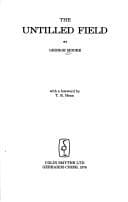
Ireland -- Emigration and Immigration -- Fiction; Ireland -- Social life and customs -- Fiction
They came back in the dusk, talking of painting and papering and the
laying out of the garden. Ellen was anxious that the garden should be
nice, and he had been much interested in the old family furniture at
Laurel Hill, not with the spindle-legged Sheraton sideboard, but with
the big Victorian furniture which the Cronins thought ugly. He liked
especially the black mahogany sideboard in the dining-room, and he was
enthusiastic about the four-post bed that Mr. Cronin had slept in for
thirty years without ever thinking it was a beautiful thing. This
massive furniture represented a life that Ned perceived for the first
time, a sedate monotonous life; and he could see these people
accomplishing the same tasks from daylight to dark; he admired the
well-defined circle of their interests and the calm security with which
they spoke of the same things every evening, deepening the tradition of
their country and of their own characters; and he conceived a sudden
passion for tradition, and felt he would like to settle down in these
grass lands in an eighteenth-century house, living always amid heavy
mahogany furniture, sleeping every night in a mahogany four-post bed:
and he could not help thinking that if he did not get the mahogany
four-post bed with the carved top, perhaps he would not care to marry
Ellen at all.
The next time he saw her their talk turned upon the house she had found
for him, and she said if he did not take it he would certainly go back
to America in the spring. She forgot herself a little; her father had
to check her, and Ned returned home sure in his mind that she would
marry him--if he asked her. And the next day he chose a pair of
trousers that he thought becoming--they were cut wide in the leg and
narrow over the instep. He looked out for a cravat that she had not
seen him wear, and he chose the largest, and he put on his braided
coat. He could not see that his moustache was not in keeping with his
clothes: he had often intended to shave it, but to-day was not the day
for shaving. She had liked his moustache, and he thought it would be a
pity she should not enjoy it, however reprehensible her taste for it
might be. And he pondered his side-whiskers, remembering they were in
keeping with his costume (larger whiskers would be still more in
keeping), and amused by his own fantastic notions, he thought he was
beginning to look like the gentleman of seventy or eighty years ago
that he had seen in varnished maplewood frames in the drawing-room at
the Cronins'. His trousers were of a later period, but they were,
nevertheless, contemporaneous with the period of the mahogany
sideboard, and that was what he liked best.
Public-domain text, read in full here on John Shaqi.
Reviews
Reviews
No reviews yet
Be the first to share your thoughts on this work.
Elsewhere in the archive
Join the Discussion
Join the discussion
Sign in to leave a comment or review.
Sign InorCreate an account