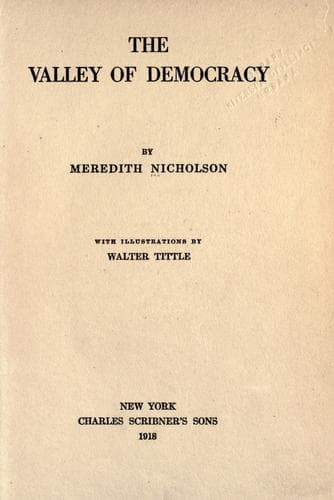
Mississippi River Valley -- Social life and customs
Following Germany’s first hostile acts against American life and
property, through the long months of waiting in which America hoped
for a continuation of neutrality, we became conscious that the point
of view held by citizens of American stock differed greatly from that
of many--of, indeed, the greater number--of our citizens of German
birth or ancestry. Until America became directly concerned it was
perfectly explicable that they should sympathize with the people,
if not with the government, of the German Empire. The _Lusitania_
tragedy, defended in many cases openly by German sympathizers; the
disclosure of the duplicity of the German ambassador, and revelations
of the insidious activity and ingenious propaganda that had been in
progress under the guise of pacifism--all condoned by great numbers of
German-Americans--brought us to a realization of the fact that even
unto the third and fourth generation the fatherland still exercised
its spell upon those we had accepted unquestioningly as fellow
citizens. And yet, viewed in the retrospect, the phenomenon is not so
remarkable. More than any other people who have enjoyed free access to
the “unguarded gates,” of which Aldrich complained many years ago, the
Germans have settled themselves in both town and country in colonies.
Intermarriage has been very general among them, and their social fife
has been circumscribed by ancestral tastes and preferences. As they
prospered they made frequent visits to Germany, strengthening ties
never wholly broken.
Public-domain text, read in full here on John Shaqi.
Reviews
Reviews
No reviews yet
Be the first to share your thoughts on this work.
Elsewhere in the archive
Join the Discussion
Join the discussion
Sign in to leave a comment or review.
Sign InorCreate an account