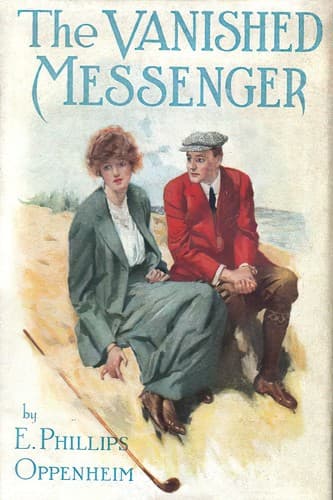
The Vanished MessengerOppenheim, E. Phillips (Edward Phillips)
General
The Vanished Messenger
Oppenheim, E. Phillips (Edward Phillips)
Detective and mystery stories; Fiction
Gerald nodded silently. They passed along the corridor. The door of
the room which Mr. Dunster had occupied was ajar. As though by common
consent, they both stopped and looked in. The windows were all wide
open, the bed freshly made. The nurse was busy collecting some medicine
bottles and fragments of lint. She looked at them in surprise.
“Mr. Dunster has left, sir,” she told them.
“We saw him go,” Gerald replied.
“Rather a quick recovery, wasn’t it, nurse?” Hamel asked.
“It wasn’t a recovery at all, sir,” the woman declared sharply. “He’d no
right to have been taken away. It’s my opinion Doctor Sarson ought to be
ashamed of himself to have permitted it.”
“They couldn’t exactly make a prison of the place, could they?” Hamel
pointed out. “The man, after all, was only a guest.”
“That’s as it may be, sir,” the nurse replied. “All the same, those that
won’t obey their doctors aren’t fit to be allowed about alone. That’s
the way I look at it.”
Mrs. Fentolin was passing along the corridor as they issued from the
room. She started a little as she saw them.
“What have you two been doing in there?” she asked quickly.
“We were just passing,” Hamel explained. “We stopped for a moment to
speak to the nurse.”
“Mr. Dunster has gone,” she said. “You saw him go, Gerald. You saw him,
too, didn’t you, Mr. Hamel?”
“I certainly did,” Hamel admitted.
Mrs. Fentolin pointed to the great north window near which they were
standing, through which the clear sunlight streamed a little pitilessly
upon her worn face and mass of dyed hair.
“You ought neither of you to be indoors for a minute on a morning like
this,” she declared. “Esther is waiting for you in the car, I think, Mr.
Hamel.”
Gerald passed on up the stairs to his room, but Hamel lingered. A
curious impulse of pity towards his hostess stirred him. The morning
sunlight seemed to have suddenly revealed the tragedy of her life.
She stood there, a tired, worn woman, with the burden heavy upon her
shoulders.
“Why not come out with Miss Fentolin and me?” he suggested. “We could
lunch at the Golf Club, out on the balcony. I wish you would. Can’t you
manage it?”
She shook her head.
“Thank you very much,” she said. “Mr. Fentolin does not like to be
left.”
Something in the finality of her words seemed to him curiously eloquent
of her state of mind. She did not move on. She seemed, indeed, to
have the air of one anxious to say more. In that ruthless light, the
advantages of her elegant clothes and graceful carriage were suddenly
stripped away from her. She was the abject wreck of a beautiful woman,
wizened, prematurely aged. Nothing remained but the eyes, which seemed
somehow to have their message for him.
“Mr. Fentolin is a little peculiar, you know,” she went on, her voice
shaking slightly with the effort she was making to keep it low. “He
allows Esther so little liberty, she sees so few young people of her own
age. I do not know why he allows you to be with her so much. Be careful,
Mr. Hamel.”
Public-domain text, read in full here on John Shaqi.
Reviews
Reviews
No reviews yet
Be the first to share your thoughts on this work.
Elsewhere in the archive
Join the Discussion
Join the discussion
Sign in to leave a comment or review.
Sign InorCreate an account