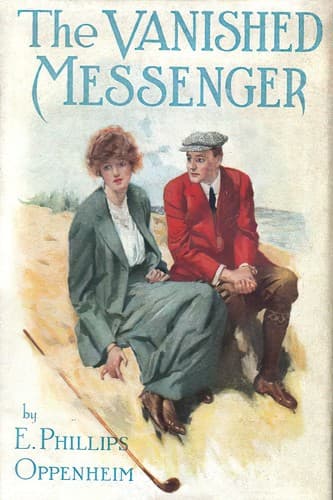
The Vanished MessengerOppenheim, E. Phillips (Edward Phillips)
General
The Vanished Messenger
Oppenheim, E. Phillips (Edward Phillips)
Detective and mystery stories; Fiction
“A poor amends,” Mr. Fentolin continued. “A morning like this was made
for lovers. Sunshine and blue sky, a salt breeze flavoured just a little
with that lavender, and a stroll through my spring gardens, where my
hyacinths are like a field of purple and gold, a mantle of jewels upon
the brown earth. Ah, well! One’s thoughts will wander to the beautiful
things of life. There were once women who loved me, Mr. Hamel.”
Hamel looked doubtfully at the strange little figure in the chair. Was
this genuine, he wondered, a voluntary outburst, or was it some subtle
attempt to incite sympathy? Mr. Fentolin seemed almost to have read his
thought.
“It is not for the sake of your pity that I say this,” he continued.
“Mine is only the passing across the line which age as well as infirmity
makes inevitable. No one in the world who lives to grow old, and who has
loved and felt the fire of it in his veins, can pass that line without
sorrow, or look back without a pang. I am among a great army. Well,
well, I shall paint no more to-day,” he concluded abruptly.
“Where is your servant?” Hamel asked.
Mr. Fentolin glanced around him carelessly.
“He has wandered away out of sight. He knows well how necessary solitude
is to me if once I take the brush between my fingers--solitude natural
and entire, I mean. If any one is within a dozen yards of me I know it,
even though I cannot see them. Meekins is wandering somewhere the other
side of the Tower.”
“Shall I call him?”
“On no account,” Mr. Fentolin begged. “Presently he will appear,
in plenty of time. There is the morning to be passed--barely eleven
o’clock, I think, now. I shall sit in my chair, and sink a little down,
and dream of these beautiful lights, these rolling, foam-flecked waves,
these patches of blue and shifting green. I can form them in my brain. I
can make a picture there, even though my fingers refuse to move. You are
not an aesthete, I think, Mr. Hamel? The study of beauty does not mean
to you what it did to your father, and my father, and, in a smaller way
to me.”
“Perhaps not,” Hamel confessed. “I believe I feel these things
somewhere, because they bring a queer sense of content with them. I am
afraid, though, that my artistic perceptions are not so keen as some
men’s.”
Mr. Fentolin looked at him thoughtfully.
“It is the physical life in your veins--too splendid to permit you
abstract pleasures. Compensations again, you see--compensations. I
wonder what the law is that governs these things. I have forgotten
sometimes,” he went on, “forgotten my own infirmities in the soft
intoxication of a wonderful seascape. Only,” he went on, his face a
little grey, “it is the physical in life which triumphs. There are the
hungry hours which nothing will satisfy.”
Public-domain text, read in full here on John Shaqi.
Reviews
Reviews
No reviews yet
Be the first to share your thoughts on this work.
Elsewhere in the archive
Join the Discussion
Join the discussion
Sign in to leave a comment or review.
Sign InorCreate an account