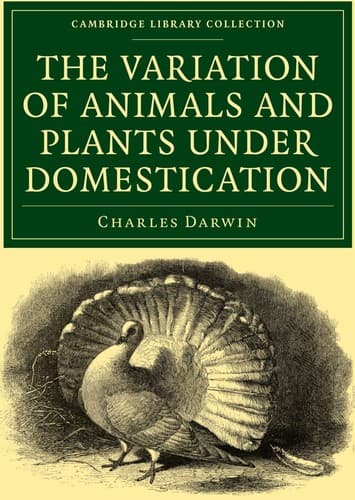
The normal number of tail-feathers in the genus Columba is 12; but
Fantails have from only 12 (as has been asserted) up to, according
to MM. Boitard and Corbié, 42. I have counted in one of my own
birds 33, and at Calcutta Mr. Blyth[12] has counted in an
_imperfect_ tail 34 feathers. In Madras, as I am informed by Sir W.
Elliot, 32 is the standard number; but in England number is much
less valued than the position and expansion of the tail. The
feathers are arranged in an irregular double row; their permanent
fanlike expansion and their upward direction are more remarkable
characters than their increased number. The tail is capable of the
same movements as in other pigeons, and can be depressed so as to
sweep the ground. It arises from a more expanded basis than in
other pigeons; and in three skeletons there were one or two extra
coccygeal vertebræ. I have examined many specimens of various
colours from different countries, and there was no trace of the
oil-gland; this is a curious case of abortion.[13] The neck is thin
and bowed backwards. The breast is broad and protuberant. The feet
are small. The carriage of the bird is very different from that of
other pigeons; in good birds the head touches the tail-feathers,
which consequently often become crumpled. They habitually tremble
much: and their necks have an extraordinary, apparently convulsive,
backward and forward movement. Good birds walk in a singular
manner, as if their small feet were stiff. Owing to their large
tails, they fly badly on a windy day. The dark-coloured varieties
are generally larger than white Fantails.
Although between the best and common Fantails, now existing in
England, there is a vast difference in the position and size of the
tail, in the carriage of the head and neck, in the convulsive
movements of the neck, in the manner of walking, and in the breadth
of the breast, the differences so graduate away, that it is
impossible to make more than one sub-race. Moore, however, an
excellent old authority[14] says, that in 1735 there were two sorts
of broad-tailed shakers (_i.e._ Fantails), “one having a neck much
longer and more slender than the other;” and I am informed by Mr.
B. P. Brent, that there is an existing German Fantail with a
thicker and shorter beak.
Public-domain text, read in full here on John Shaqi.
Reviews
Reviews
No reviews yet
Be the first to share your thoughts on this work.
Elsewhere in the archive
Join the Discussion
Join the discussion
Sign in to leave a comment or review.
Sign InorCreate an account