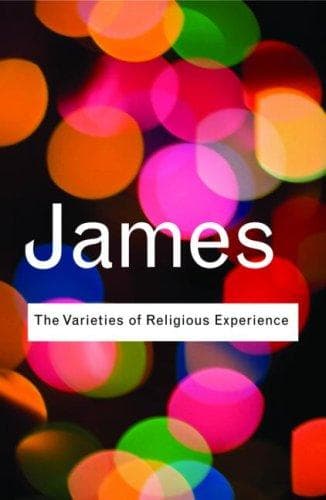
The Varieties of Religious Experience: A Study in Human NatureJames, William
ReligionComparative
The Varieties of Religious Experience: A Study in Human Nature
James, William
Conversion; Experience (Religion); Philosophy and religion; Psychology, Religious; Religion
Now if you ask of psychology just _how_ the excitement shifts in a man’s
mental system, and _why_ aims that were peripheral become at a certain
moment central, psychology has to reply that although she can give a
general description of what happens, she is unable in a given case to
account accurately for all the single forces at work. Neither an outside
observer nor the Subject who undergoes the process can explain fully how
particular experiences are able to change one’s centre of energy so
decisively, or why they so often have to bide their hour to do so. We have
a thought, or we perform an act, repeatedly, but on a certain day the real
meaning of the thought peals through us for the first time, or the act has
suddenly turned into a moral impossibility. All we know is that there are
dead feelings, dead ideas, and cold beliefs, and there are hot and live
ones; and when one grows hot and alive within us, everything has to re‐
crystallize about it. We may say that the heat and liveliness mean only
the “motor efficacy,” long deferred but now operative, of the idea; but
such talk itself is only circumlocution, for whence the sudden motor
efficacy? And our explanations then get so vague and general that one
realizes all the more the intense individuality of the whole phenomenon.
In the end we fall back on the hackneyed symbolism of a mechanical
equilibrium. A mind is a system of ideas, each with the excitement it
arouses, and with tendencies impulsive and inhibitive, which mutually
check or reinforce one another. The collection of ideas alters by
subtraction or by addition in the course of experience, and the tendencies
alter as the organism gets more aged. A mental system may be undermined or
weakened by this interstitial alteration just as a building is, and yet
for a time keep upright by dead habit. But a new perception, a sudden
emotional shock, or an occasion which lays bare the organic alteration,
will make the whole fabric fall together; and then the centre of gravity
sinks into an attitude more stable, for the new ideas that reach the
centre in the rearrangement seem now to be locked there, and the new
structure remains permanent.
Public-domain text, read in full here on John Shaqi.
Reviews
Reviews
No reviews yet
Be the first to share your thoughts on this work.
Elsewhere in the archive
Join the Discussion
Join the discussion
Sign in to leave a comment or review.
Sign InorCreate an account