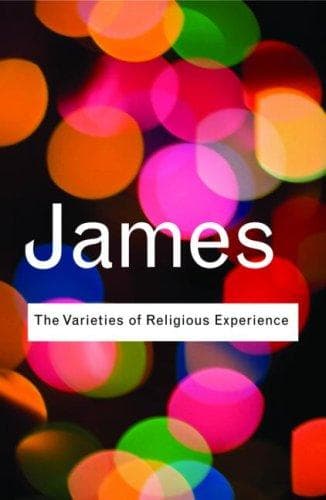
The Varieties of Religious Experience: A Study in Human NatureJames, William
ReligionComparative
The Varieties of Religious Experience: A Study in Human Nature
James, William
Conversion; Experience (Religion); Philosophy and religion; Psychology, Religious; Religion
The temper of the tranquil‐mindedness differs, of course, according as the
person is of a constitutionally sombre or of a constitutionally cheerful
cast of mind. In the sombre it partakes more of resignation and
submission; in the cheerful it is a joyous consent. As an example of the
former temper, I quote part of a letter from Professor Lagneau, a
venerated teacher of philosophy who lately died, a great invalid, at
Paris:—
“My life, for the success of which you send good wishes, will be
what it is able to be. I ask nothing from it, I expect nothing
from it. For long years now I exist, think, and act, and am worth
what I am worth, only through the despair which is my sole
strength and my sole foundation. May it preserve for me, even in
these last trials to which I am coming, the courage to do without
the desire of deliverance. I ask nothing more from the Source
whence all strength cometh, and if that is granted, your wishes
will have been accomplished.”(168)
There is something pathetic and fatalistic about this, but the power of
such a tone as a protection against outward shocks is manifest. Pascal is
another Frenchman of pessimistic natural temperament. He expresses still
more amply the temper of self‐surrendering submissiveness:—
“Deliver me, Lord,” he writes in his prayers, “from the sadness at
my proper suffering which self‐love might give, but put into me a
sadness like your own. Let my sufferings appease your choler. Make
them an occasion for my conversion and salvation. I ask you
neither for health nor for sickness, for life nor for death; but
that you may dispose of my health and my sickness, my life and my
death, for your glory, for my salvation, and for the use of the
Church and of your saints, of whom I would by your grace be one.
You alone know what is expedient for me; you are the sovereign
master; do with me according to your will. Give to me, or take
away from me, only conform my will to yours. I know but one thing,
Lord, that it is good to follow you, and bad to offend you. Apart
from that, I know not what is good or bad in anything. I know not
which is most profitable to me, health or sickness, wealth or
poverty, nor anything else in the world. That discernment is
beyond the power of men or angels, and is hidden among the secrets
of your Providence, which I adore, but do not seek to
fathom.”(169)
When we reach more optimistic temperaments, the resignation grows less
passive. Examples are sown so broadcast throughout history that I might
well pass on without citation. As it is, I snatch at the first that occurs
to my mind. Madame Guyon, a frail creature physically, was yet of a happy
native disposition. She went through many perils with admirable serenity
of soul. After being sent to prison for heresy,—
Public-domain text, read in full here on John Shaqi.
Reviews
Reviews
No reviews yet
Be the first to share your thoughts on this work.
Elsewhere in the archive
Join the Discussion
Join the discussion
Sign in to leave a comment or review.
Sign InorCreate an account