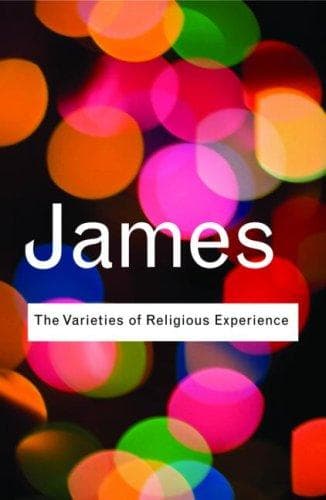
The Varieties of Religious Experience: A Study in Human NatureJames, William
ReligionComparative
The Varieties of Religious Experience: A Study in Human Nature
James, William
Conversion; Experience (Religion); Philosophy and religion; Psychology, Religious; Religion
Since it is impossible to deny secular alterations in our sentiments and
needs, it would be absurd to affirm that one’s own age of the world can be
beyond correction by the next age. Skepticism cannot, therefore, be ruled
out by any set of thinkers as a possibility against which their
conclusions are secure; and no empiricist ought to claim exemption from
this universal liability. But to admit one’s liability to correction is
one thing, and to embark upon a sea of wanton doubt is another. Of
willfully playing into the hands of skepticism we cannot be accused. He
who acknowledges the imperfectness of his instrument, and makes allowance
for it in discussing his observations, is in a much better position for
gaining truth than if he claimed his instrument to be infallible. Or is
dogmatic or scholastic theology less doubted in point of fact for
claiming, as it does, to be in point of right undoubtable? And if not,
what command over truth would this kind of theology really lose if,
instead of absolute certainty, she only claimed reasonable probability for
her conclusions? If _we_ claim only reasonable probability, it will be as
much as men who love the truth can ever at any given moment hope to have
within their grasp. Pretty surely it will be more than we could have had,
if we were unconscious of our liability to err.
Nevertheless, dogmatism will doubtless continue to condemn us for this
confession. The mere outward form of inalterable certainty is so precious
to some minds that to renounce it explicitly is for them out of the
question. They will claim it even where the facts most patently pronounce
its folly. But the safe thing is surely to recognize that all the insights
of creatures of a day like ourselves must be provisional. The wisest of
critics is an altering being, subject to the better insight of the morrow,
and right at any moment, only “up to date” and “on the whole.” When larger
ranges of truth open, it is surely best to be able to open ourselves to
their reception, unfettered by our previous pretensions. “Heartily know,
when half‐gods go, the gods arrive.”
Public-domain text, read in full here on John Shaqi.
Reviews
Reviews
No reviews yet
Be the first to share your thoughts on this work.
Elsewhere in the archive
Join the Discussion
Join the discussion
Sign in to leave a comment or review.
Sign InorCreate an account