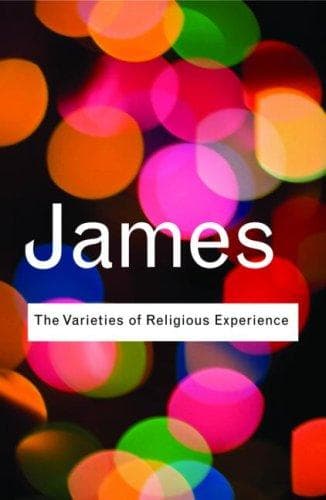
The Varieties of Religious Experience: A Study in Human NatureJames, William
ReligionComparative
The Varieties of Religious Experience: A Study in Human Nature
James, William
Conversion; Experience (Religion); Philosophy and religion; Psychology, Religious; Religion
In these remarks I am leaning only upon mankind’s common instinct for
reality, which in point of fact has always held the world to be
essentially a theatre for heroism. In heroism, we feel, life’s supreme
mystery is hidden. We tolerate no one who has no capacity whatever for it
in any direction. On the other hand, no matter what a man’s frailties
otherwise may be, if he be willing to risk death, and still more if he
suffer it heroically, in the service he has chosen, the fact consecrates
him forever. Inferior to ourselves in this or that way, if yet we cling to
life, and he is able “to fling it away like a flower” as caring nothing
for it, we account him in the deepest way our born superior. Each of us in
his own person feels that a high‐hearted indifference to life would
expiate all his shortcomings.
The metaphysical mystery, thus recognized by common sense, that he who
feeds on death that feeds on men possesses life supereminently and
excellently, and meets best the secret demands of the universe, is the
truth of which asceticism has been the faithful champion. The folly of the
cross, so inexplicable by the intellect, has yet its indestructible vital
meaning.
Representatively, then, and symbolically, and apart from the vagaries into
which the unenlightened intellect of former times may have let it wander,
asceticism must, I believe, be acknowledged to go with the profounder way
of handling the gift of existence. Naturalistic optimism is mere syllabub
and flattery and sponge‐cake in comparison. The practical course of action
for us, as religious men, would therefore, it seems to me, not be simply
to turn our backs upon the ascetic impulse, as most of us to‐day turn
them, but rather to discover some outlet for it of which the fruits in the
way of privation and hardship might be objectively useful. The older
monastic asceticism occupied itself with pathetic futilities, or
terminated in the mere egotism of the individual, increasing his own
perfection.(217) But is it not possible for us to discard most of these
older forms of mortification, and yet find saner channels for the heroism
which inspired them?
Does not, for example, the worship of material luxury and wealth, which
constitutes so large a portion of the “spirit” of our age, make somewhat
for effeminacy and unmanliness? Is not the exclusively sympathetic and
facetious way in which most children are brought up to‐day—so different
from the education of a hundred years ago, especially in evangelical
circles—in danger, in spite of its many advantages, of developing a
certain trashiness of fibre? Are there not hereabouts some points of
application for a renovated and revised ascetic discipline?
Public-domain text, read in full here on John Shaqi.
Reviews
Reviews
No reviews yet
Be the first to share your thoughts on this work.
Elsewhere in the archive
Join the Discussion
Join the discussion
Sign in to leave a comment or review.
Sign InorCreate an account