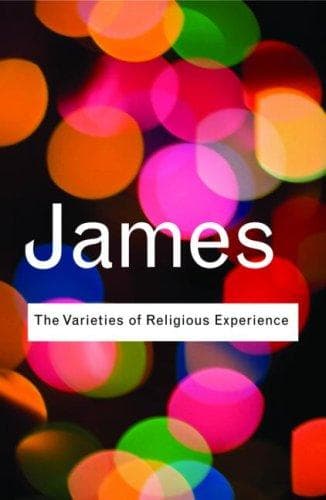
The Varieties of Religious Experience: A Study in Human NatureJames, William
ReligionComparative
The Varieties of Religious Experience: A Study in Human Nature
James, William
Conversion; Experience (Religion); Philosophy and religion; Psychology, Religious; Religion
It is true that so far as wealth gives time for ideal ends and exercise to
ideal energies, wealth is better than poverty and ought to be chosen. But
wealth does this in only a portion of the actual cases. Elsewhere the
desire to gain wealth and the fear to lose it are our chief breeders of
cowardice and propagators of corruption. There are thousands of
conjunctures in which a wealth‐bound man must be a slave, whilst a man for
whom poverty has no terrors becomes a freeman. Think of the strength which
personal indifference to poverty would give us if we were devoted to
unpopular causes. We need no longer hold our tongues or fear to vote the
revolutionary or reformatory ticket. Our stocks might fall, our hopes of
promotion vanish, our salaries stop, our club doors close in our faces;
yet, while we lived, we would imperturbably bear witness to the spirit,
and our example would help to set free our generation. The cause would
need its funds, but we its servants would be potent in proportion as we
personally were contented with our poverty.
I recommend this matter to your serious pondering, for it is certain that
the prevalent fear of poverty among the educated classes is the worst
moral disease from which our civilization suffers.
‐‐‐‐‐‐‐‐‐‐‐‐‐‐‐‐‐‐‐‐‐‐‐‐‐‐‐‐‐‐‐‐‐‐‐‐‐
I have now said all that I can usefully say about the several fruits of
religion as they are manifested in saintly lives, so I will make a brief
review and pass to my more general conclusions.
Our question, you will remember, is as to whether religion stands approved
by its fruits, as these are exhibited in the saintly type of character.
Single attributes of saintliness may, it is true, be temperamental
endowments, found in non‐religious individuals. But the whole group of
them forms a combination which, as such, is religious, for it seems to
flow from the sense of the divine as from its psychological centre.
Whoever possesses strongly this sense comes naturally to think that the
smallest details of this world derive infinite significance from their
relation to an unseen divine order. The thought of this order yields him a
superior denomination of happiness, and a steadfastness of soul with which
no other can compare. In social relations his serviceability is exemplary;
he abounds in impulses to help. His help is inward as well as outward, for
his sympathy reaches souls as well as bodies, and kindles unsuspected
faculties therein. Instead of placing happiness where common men place it,
in comfort, he places it in a higher kind of inner excitement, which
converts discomforts into sources of cheer and annuls unhappiness. So he
turns his back upon no duty, however thankless; and when we are in need of
assistance, we can count upon the saint lending his hand with more
certainty than we can count upon any other person. Finally, his humble‐
mindedness and his ascetic tendencies save him from the petty personal
Public-domain text, read in full here on John Shaqi.
Reviews
Reviews
No reviews yet
Be the first to share your thoughts on this work.
Elsewhere in the archive
Join the Discussion
Join the discussion
Sign in to leave a comment or review.
Sign InorCreate an account